Common Signs Your Commercial Dishwasher Needs Professional Servicing
Last updated:
A commercial dishwasher rarely fails without warning. It gives subtle signals first, and recognizing these warning signs is the difference between scheduling routine upkeep and needing emergency commercial dishwasher repair during a busy dinner service. If your unit leaves film on glassware or requires multiple cycles to clean plates, it needs attention. Recognizing these symptoms early helps you avoid costly downtime and stay compliant with health regulations.
This guide highlights the key warning signs that your unit needs attention, what each symptom means, and when to call a professional technician for professional commercial dishwasher repair services.
What professional servicing actually covers
A professional service visit goes beyond routine end-of-shift cleaning. A technician checks wash and rinse temperatures, inspects the heating element and thermostat, delimes internal components and spray arms, tests the drain pump and fill valve, and verifies proper sanitization. Timely inspections reduce the need for major commercial dishwasher repair and ensure high-temp and chemical-sanitizing machines hit required health standards.
Food safety standards in Ontario strictly regulate dishwashing practices. The provincial Food Premises Regulation mandates specific cleaning and sanitizing temperatures, which inspectors verify using Ottawa Public Health food safety guidelines. A dishwasher operating out of spec may look fine on the surface while failing health checks.
Quick take
Regular servicing is preventive. Spotting a failing element, clogged spray arm, or inadequate rinse temperature early prevents cloudy glassware, failed health inspections, and sudden breakdowns.
The dishes come out wrong
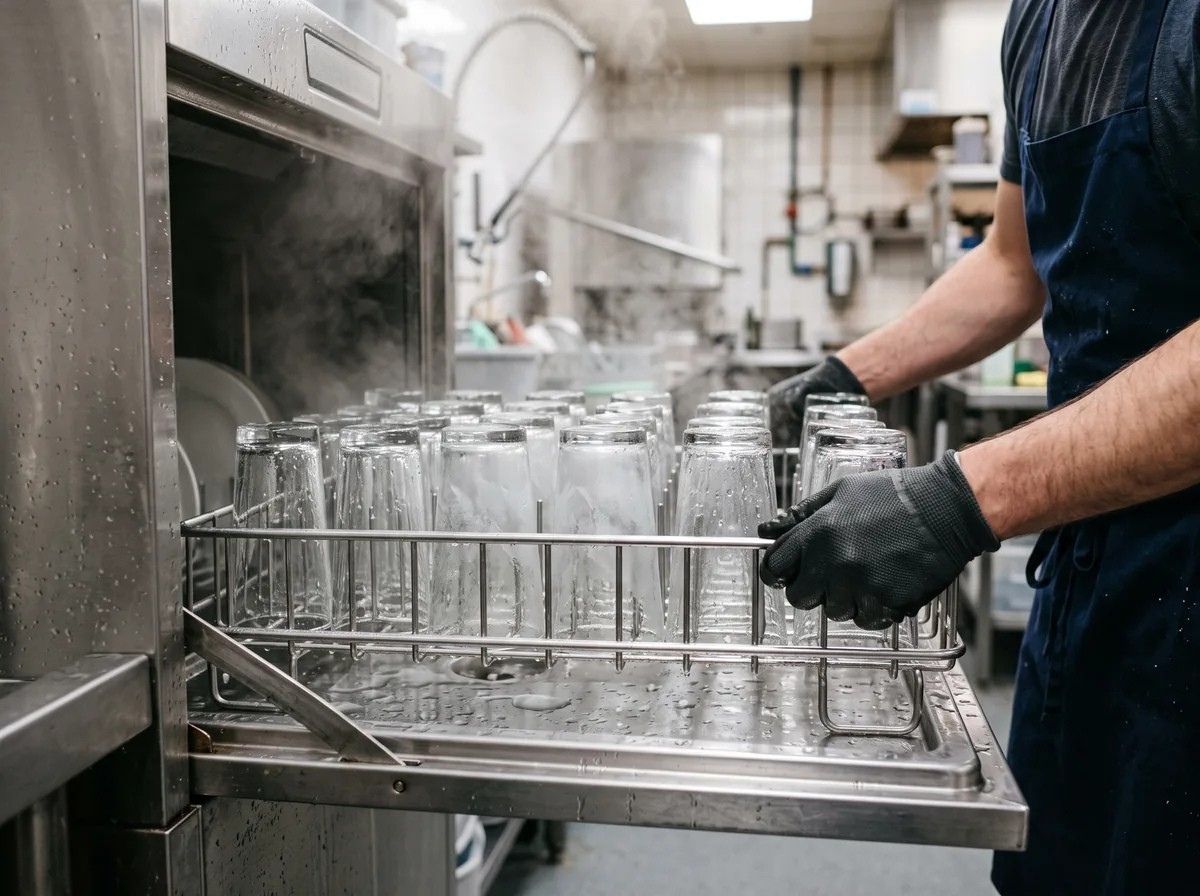
Inconsistent cleaning results usually indicate machine failure rather than poor detergent quality. Key warning signs include:
While an occasional poorly loaded rack happens, widespread cleaning issues across multiple cycles mean your unit needs servicing. Hard water in Ottawa accelerates scale buildup, making mineral deposits a primary cause of declining wash performance.
Did you know?
Even thin scale buildup on a heating element significantly reduces heating efficiency. Deliming is an essential maintenance task that prevents the machine from overworking and consuming excess energy.
Weak heat, weak rinse, weak results
Commercial dishwashers rely on strict temperature controls. High-temp machines require a 180 degree Fahrenheit final rinse to sanitize. If the booster heater fails, cycles take longer or the rinse feels lukewarm. When temperature drops threaten hygiene compliance, prompt commercial dishwasher repair is necessary to restore proper operation.
Low water pressure also degrades performance. Clogged fill valves, weak pumps, or blocked spray arms reduce spray force, leaving dishes dirty. If basic troubleshooting does not resolve the issue, review our guide on common issues affecting commercial dishwasher performance.
Red flag: Lukewarm final rinse
A rinse cycle that fails to reach required sanitizing temperatures is a serious food safety violation. If the rinse gauge reads low or dishes feel cool, stop relying on that unit and schedule professional servicing immediately.
New noises, leaks, and long cycles
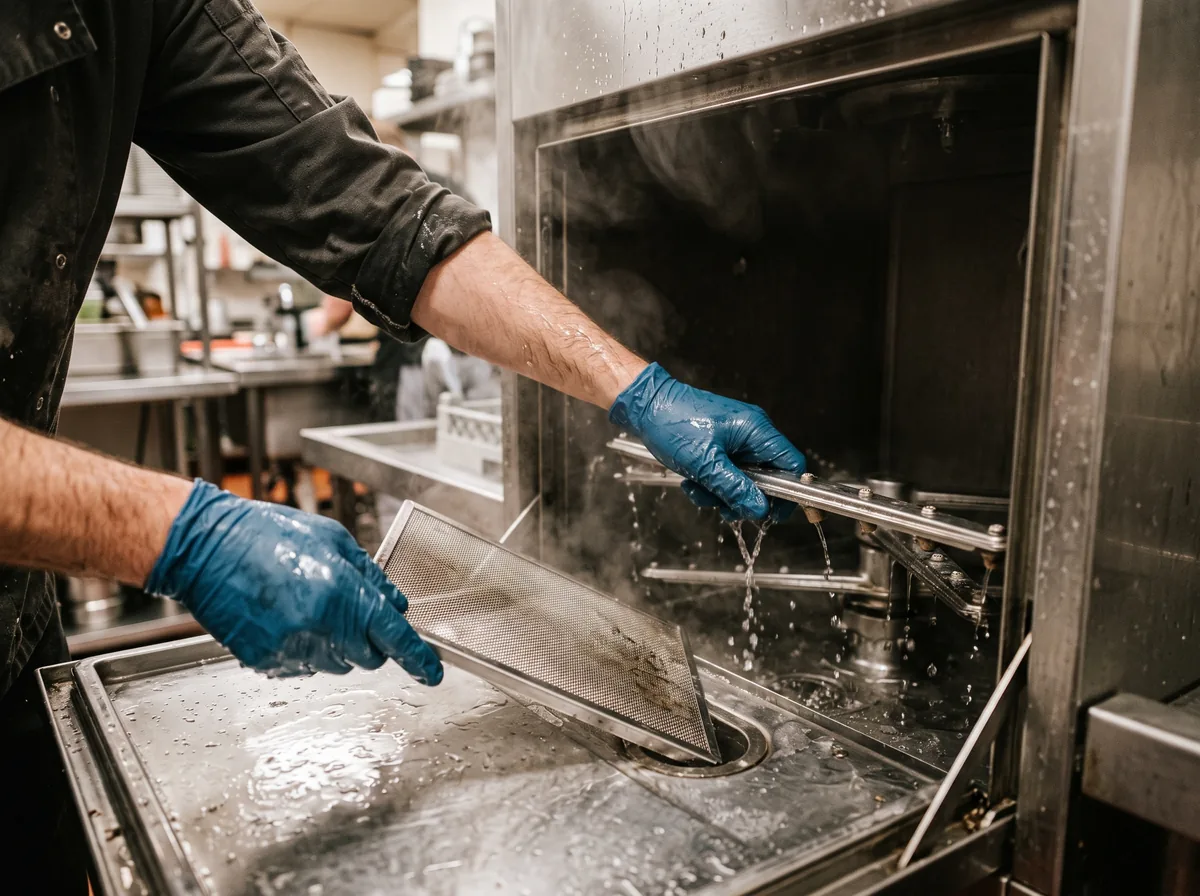
Unusual sounds and leaks are clear indicators of mechanical problems. Grinding, screeching, or knocking noises typically point to failing wash pump bearings, motor wear, or obstructed spray arms. Water pooling beneath or around the machine indicates damaged door gaskets, cracked hoses, or drain blockages.
Extended cycle times should not be ignored. When a machine that normally runs in 90 seconds takes significantly longer, it is usually struggling with scale buildup, a failing element, or pump strain. Slower cycles disrupt kitchen workflow and deteriorate over time without intervention.
Should you run a leaking commercial dishwasher?
No. Even small leaks create slip risks, electrical hazards, and floor damage. Turn off the unit, clean the area, and inspect the gaskets and hoses. Replacing a worn gasket early prevents severe water and electrical damage later.
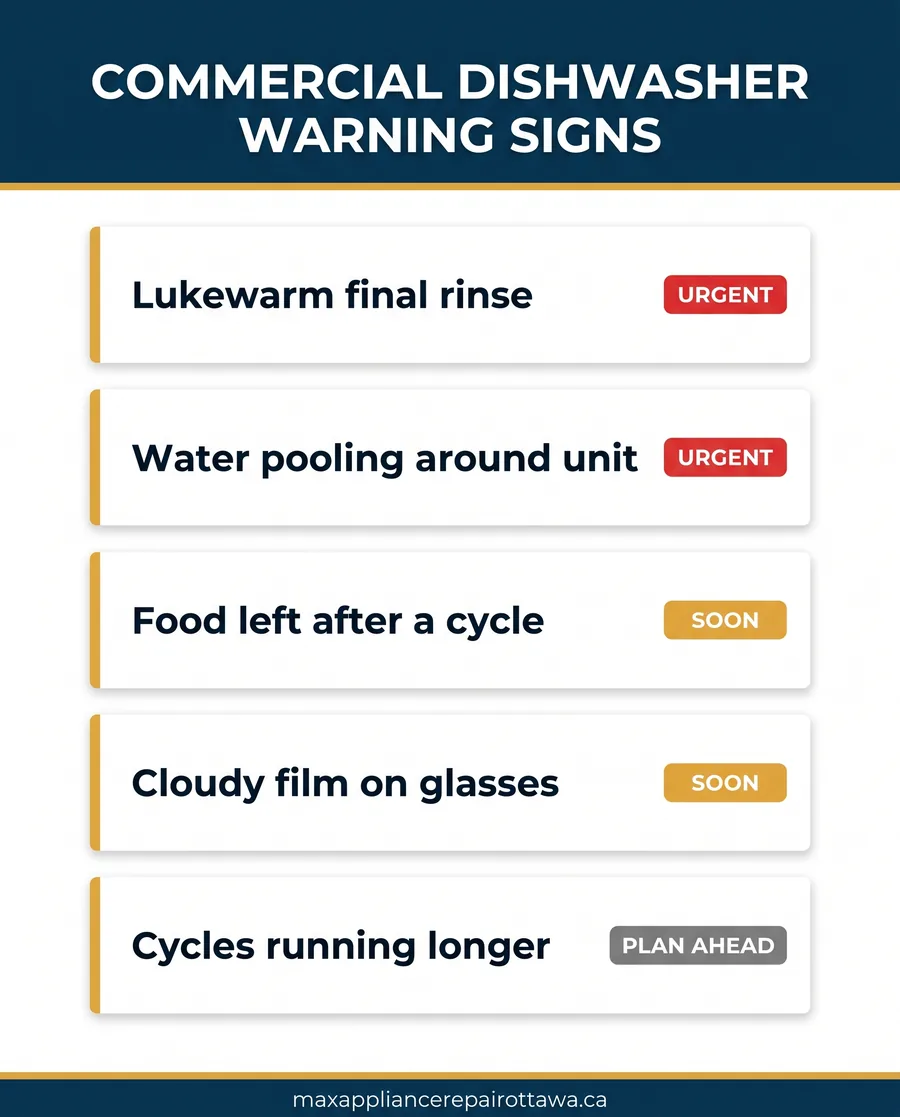
Warning signs and how urgent they are
Use this reference table to evaluate common symptoms and determine the required response time for your equipment.
| Warning sign | Likely cause | Urgency level |
|---|---|---|
| Cloudy film on glassware | Mineral scale, hard water, or rinse-aid issue | Moderate (Schedule service soon) |
| Food debris after cycle | Clogged spray arms or low water pressure | Moderate (Affects health standards) |
| Lukewarm final rinse | Failing booster heater or element | High (Sanitization failure risk) |
| Water leaks under unit | Worn gasket, leaking hose, or drain fault | High (Safety hazard) |
| Grinding or knocking sounds | Failing pump motor or worn bearings | High (Prevents major breakdown) |
| Unusually long cycle times | Scale buildup, weak element, or pump strain | Moderate (Schedule maintenance) |
What you can handle vs. when to call a technician
Kitchen staff should manage basic, preventive tasks to maintain performance:
Complex issues require specialized commercial dishwasher repair. Booster heater failures, motor noise, recurring leaks, error codes, and improper sanitizing temperatures must be handled by trained technicians to avoid safety hazards and equipment damage.
Download the free checklist
Keep your kitchen compliant with our one-page maintenance reference sheet.
Download the commercial dishwasher maintenance checklist (PDF)
Frequently Asked Questions
Ignoring early warning signs leads to emergency breakdowns and health code violations. Max Appliance Repair Ottawa provides reliable commercial dishwasher repair across Nepean, Gloucester, and the surrounding Ottawa area. If your equipment shows any of these symptoms, contact our Ottawa team today to schedule expert servicing.