The Biggest Mistakes Restaurant Owners Make with Commercial Dishwashers
Last updated:
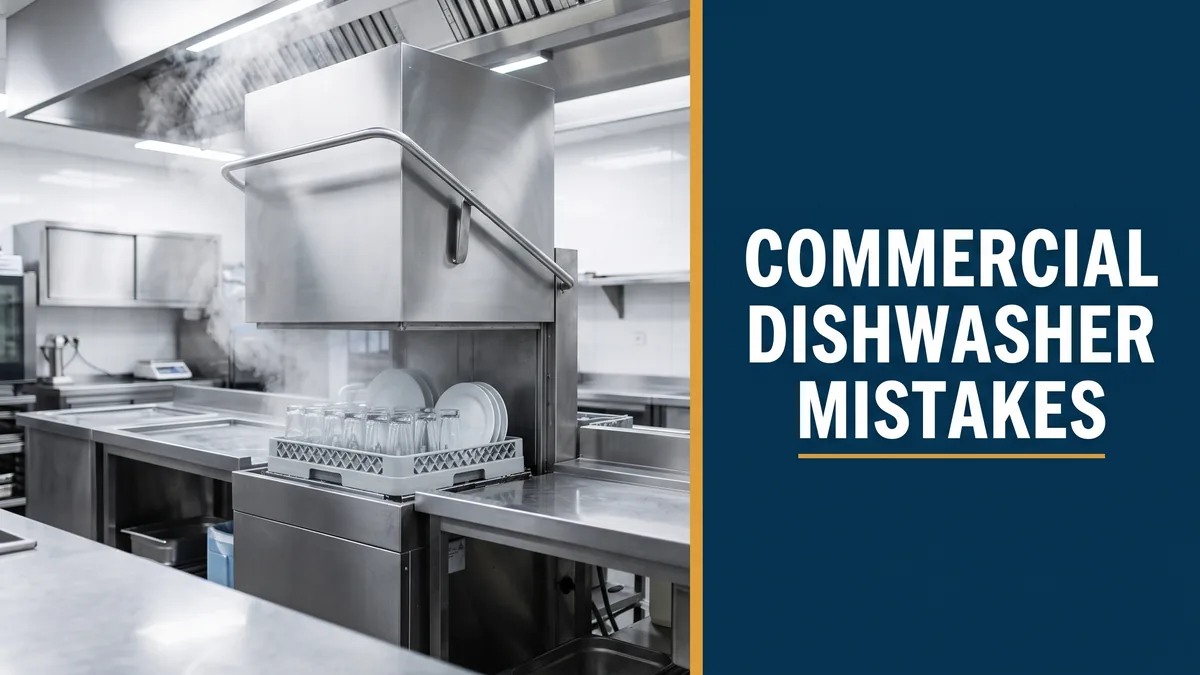
A commercial dishwasher rarely dies on a quiet Tuesday. It quits mid-rush on a Friday night with a full house and a wall of dirty plates because small operating mistakes stacked up over time. Most of those failures are completely avoidable. In fact, most commercial dishwasher repair calls in Ottawa kitchens trace back to the same handful of habits. If your unit is struggling, taking care of these issues early will save you time, money, and unnecessary downtime.
This guide is written specifically for restaurant owners and kitchen managers. By fixing the five mistakes below, you can reduce your maintenance costs and avoid failing health inspections caused by poor sanitation.
Mistake 1: Ignoring wash and rinse temperatures
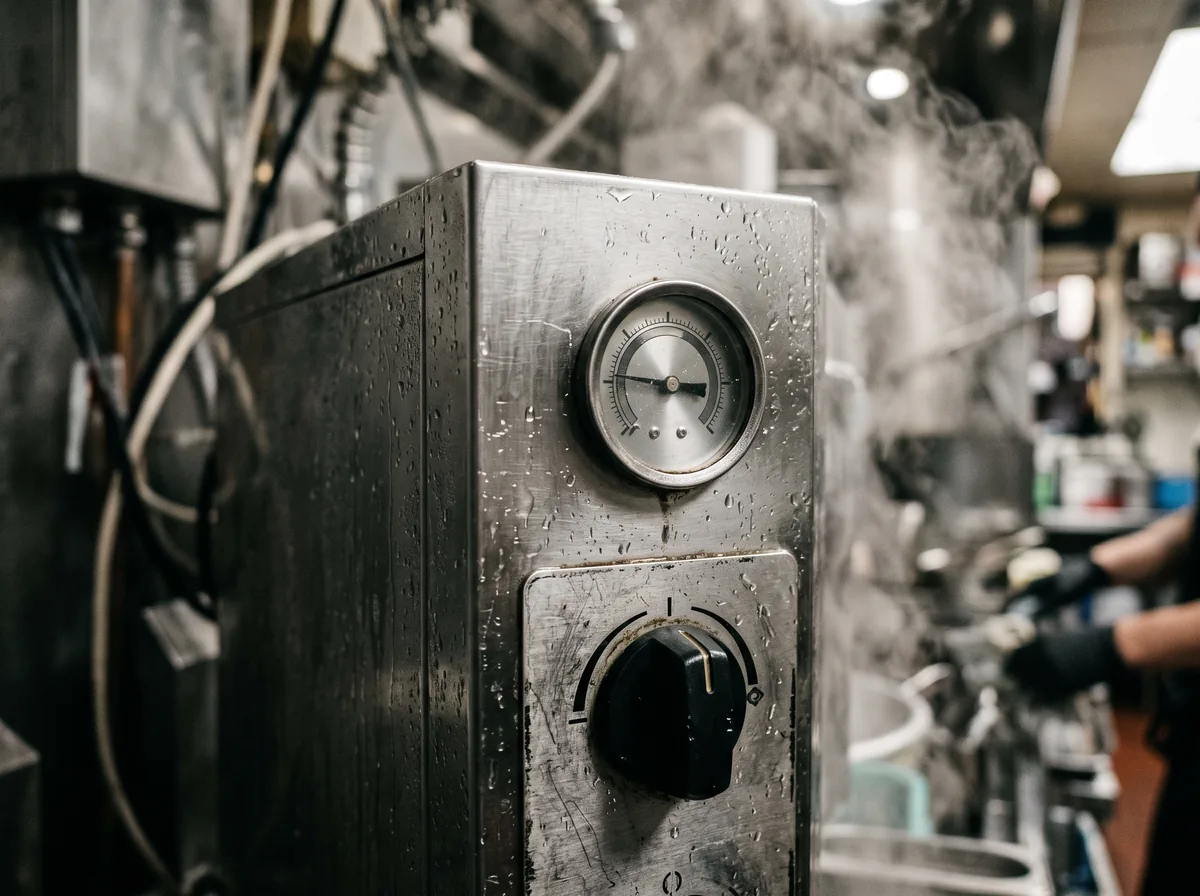
Proper temperature control is critical for effective sanitation, yet many kitchen teams stop checking gauges after initial installation. High-temp commercial dishwashers require a final sanitizing rinse of around 82°C (180°F), while the wash tank must maintain adequate heat throughout service. When temperatures drop below required thresholds, dishware may look clean but remains unsanitized.
In Ontario, minimum wash and rinse temperatures for commercial warewashing are legally mandated under the provincial Food Premises Regulation. Maintaining proper temperatures is both a performance requirement and a health compliance standard. Faulty heating elements or malfunctioning thermostats are primary culprits, typically causing delayed cycle times or incomplete heating.
Red Flag
If your rinse gauge consistently reads below the sanitizing range, or if staff routinely re-run dish cycles to achieve cleanliness, have your heating element and thermostat inspected immediately. Operating below required temperatures poses a major health compliance risk.
Mistake 2: Skipping routine descaling and deliming
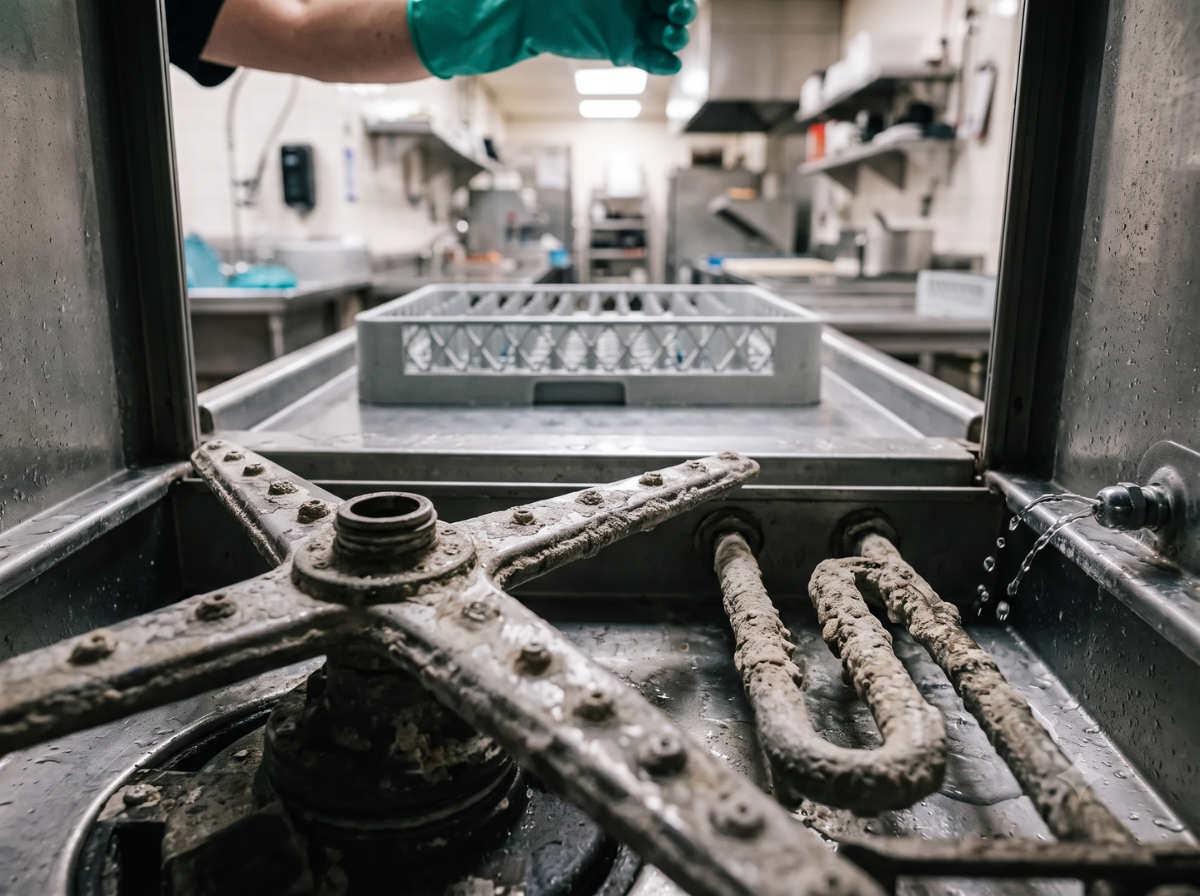
Ottawa’s hard water contributes significantly to long-term wear on commercial dishwashers. Each wash cycle leaves behind mineral deposits on heating elements, spray arms, and nozzles. Failing to perform regular deliming allows scale to build up into a hard crust that restricts water flow, reduces heating efficiency, and eventually causes heating element burnout.
A common error among kitchen staff is treating deliming as an occasional task rather than a routine procedure. In high-volume environments, deliming should strictly follow manufacturer recommendations. Addressing scale build-up early prevents premature system failure and reduces the need for emergency commercial dishwasher repair.
Did You Know?
Even a single millimeter of scale build-up on a heating element significantly increases energy consumption by insulating the element and forcing it to run longer. Regular deliming helps lower utility costs and extends equipment longevity.
Mistake 3: Using the wrong detergent or improper dosing
Commercial dishwashers require specialized high-efficiency detergents formulated for rapid wash cycles. Household detergents or non-compatible formulas lead to excessive sudding, inadequate cleaning, and internal component damage. Similarly, incorrect chemical dosing creates performance issues: under-dosing leaves grease behind, while over-dosing causes residue film, metal corrosion, and chemical waste.
Dispenser pumps and pickup tubes can clog or lose calibration over time. A chemical system set correctly six months ago may currently be delivering inaccurate concentrations. Routinely verify chemical draw rates and ensure settings align with your chemical supplier’s specifications.
Save Your Money
Monitor detergent consumption based on rack volume rather than weekly estimates. A sudden spike in usage usually indicates an over-dosing dispenser, which increases supply expenses and risks internal corrosion.
Mistakes 4 and 5: Overloading racks and ignoring maintenance logs
During peak hours, staff may be tempted to overload dish racks to speed up clearing times. However, overcrowding prevents water spray from reaching all surfaces, leading to re-washes that double water, energy, and chemical usage. Overlapping plates and nested cookware remain the leading causes of incomplete cleaning in busy kitchens.
Another major mistake is operating without a standardized maintenance log. Without written tracking for deliming, filter cleanings, temperature verifications, and chemical checks, minor operational issues go unnoticed until complete equipment failure occurs. Implementing a daily checklist ensures operational consistency and prevents costly emergency services.
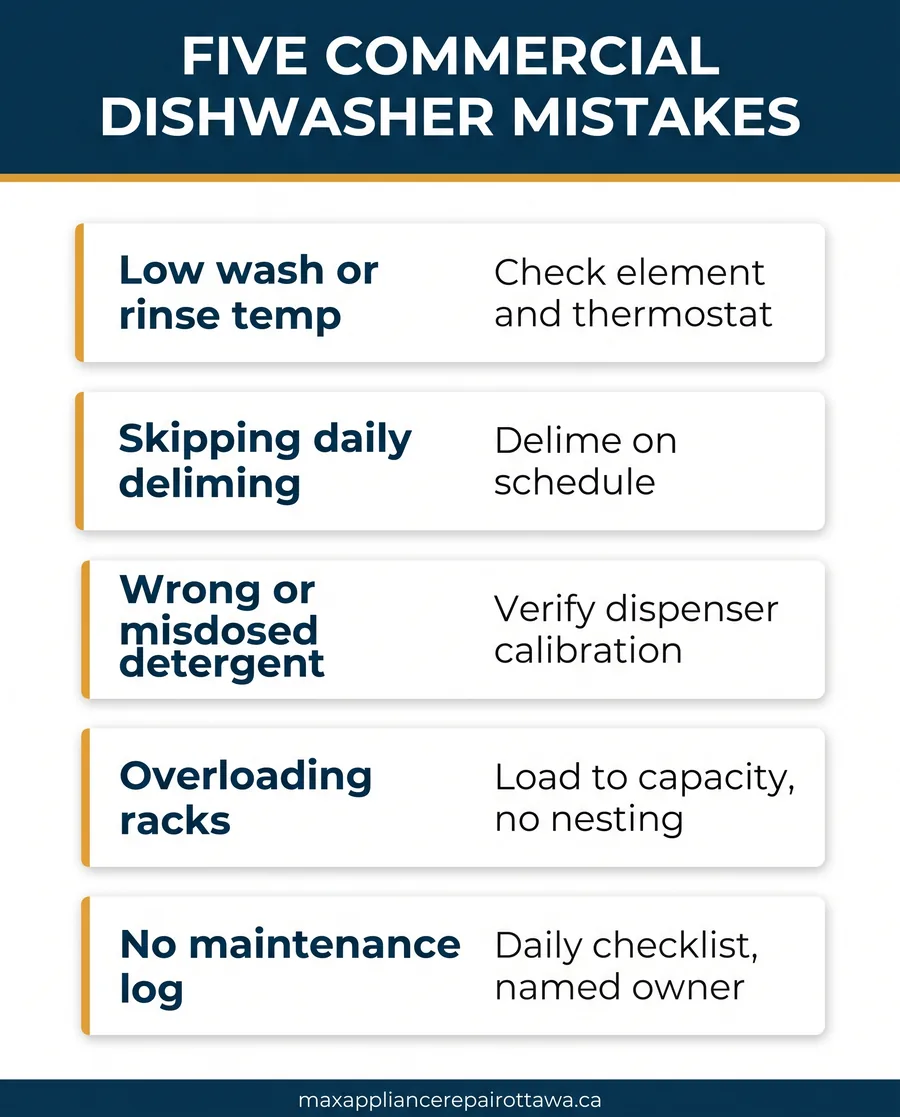
The five mistakes, costs, and solutions
Use this reference table to identify operational risks and implement preventive measures before equipment breakdowns occur:
| Mistake | Operational Impact | Preventive Action |
|---|---|---|
| Low wash or rinse temperatures | Unsanitized dishes, inspection non-compliance, element burnout | Inspect heating elements and thermostats; log daily temperatures |
| Skipping routine deliming | Clogged spray nozzles, dirty dishware, premature element failure | Delime regularly according to manufacturer guidelines and water hardness |
| Incorrect chemical selection or dosing | Greasy dishware, chemical film, component corrosion, excess cost | Use commercial formulations and regularly calibrate dispenser pumps |
| Overloading dish racks | Blocked water spray, repeated cycles, increased utility costs | Follow proper rack loading guidelines without nesting items |
| Lack of maintenance logging | Unnoticed equipment degradation leading to unexpected failures | Implement daily checklist assigned to shift managers |
Download Your Free Maintenance Guide
Download our concise daily maintenance checklist to keep your commercial dishwasher sanitizing properly and fully compliant with health inspections.
Frequently Asked Questions
When commercial kitchen equipment breaks down during service, operational downtime quickly impacts your bottom line. Max Appliance Repair Ottawa provides reliable, prompt commercial dishwasher repair for restaurants across Orléans, Gloucester, Nepean, and the greater Ottawa region. Contact our team today to schedule a service visit and keep your kitchen running smoothly.