
Why Is My Espresso Machine Not Building Pressure? (And How to Fix It)
Pulling a shot that looks watery, runs too fast, or lacks the thick crema you expect usually points to a pressure problem. Unlike a pump that runs but produces no water (a separate issue), a low-pressure problem shows up as espresso that extracts too quickly because the machine cannot maintain the 9 bars of pressure needed to slow the flow through a properly ground, properly dosed portafilter. This guide covers the main causes of low pressure, with specific attention to Ottawa’s hard water conditions that accelerate scale-related pressure loss faster than most other Canadian cities.
How espresso pressure works and what 9 bars means
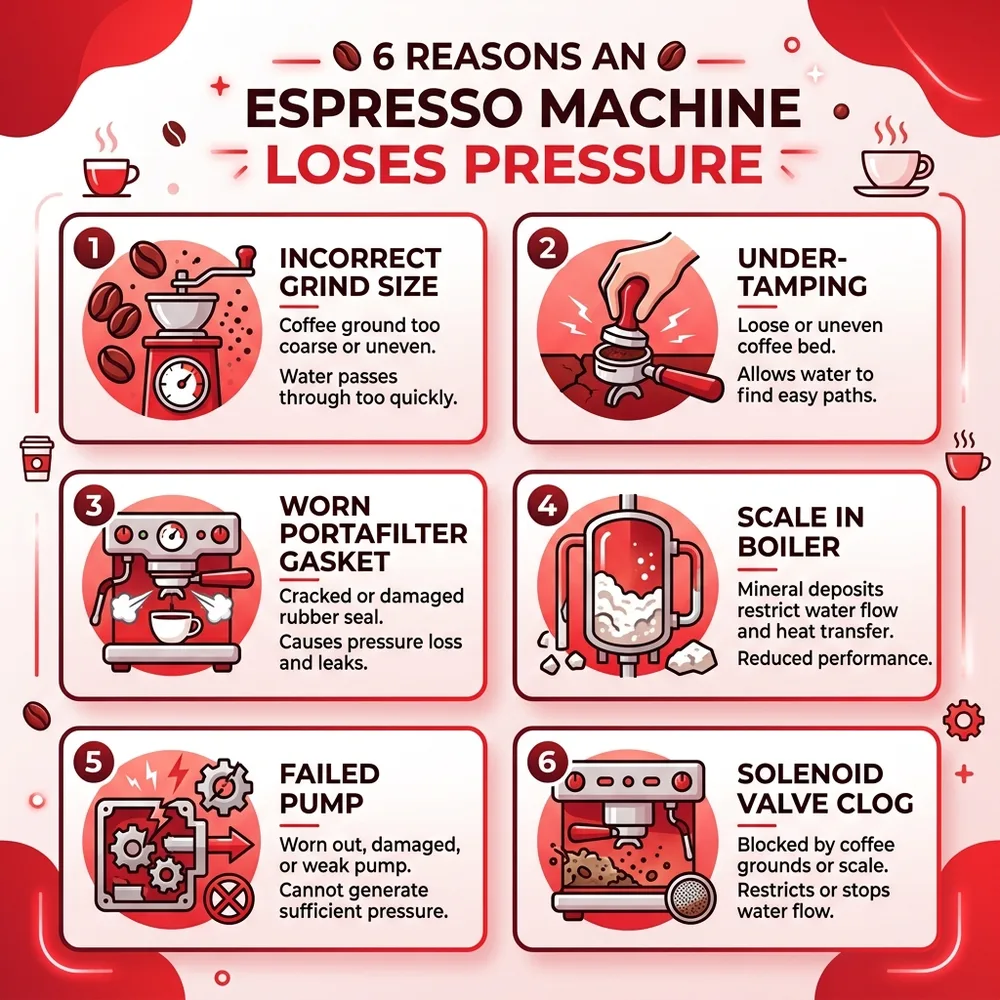
Espresso machines use a pump to force hot water through finely ground coffee at approximately 9 bars of pressure (about 130 PSI). That pressure, combined with the resistance of the coffee puck, slows extraction to the correct rate – typically 25 to 30 seconds for a double shot through a 18-gram dose. When pressure is too low, the water flows through too fast and the shot is thin, sour, and under-extracted. When pressure is too high (less common but possible), it over-extracts and produces bitter, harsh espresso.
Most home machines have a fixed pump pressure around 9 to 11 bars. On machines with a pressure gauge (usually prosumer models from Rancilio, ECM, La Marzocco, and others), you can watch the pressure during extraction. Without a gauge, you are diagnosing by the shot characteristics: flow rate, crema thickness, and taste.
Wrong grind size or dose: the most common pressure issue
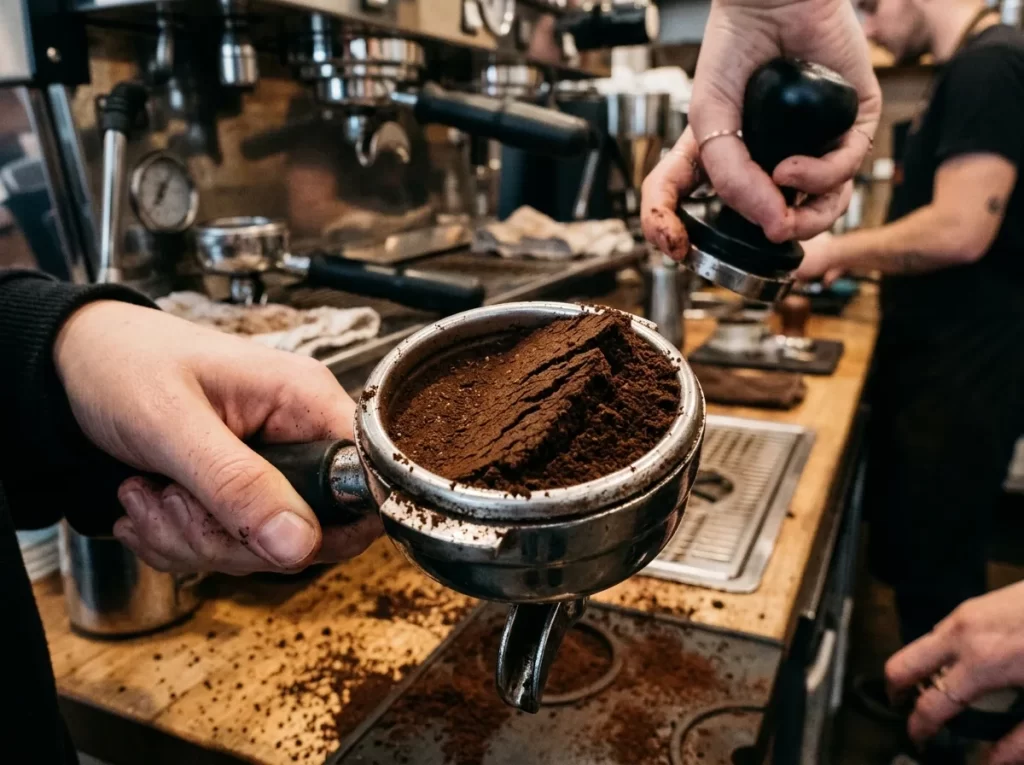
Before diagnosing any mechanical issue, rule out the coffee setup. A grind that is too coarse, a dose that is too light, or a tamp that is too loose all allow water to flow through the puck with little resistance – producing what looks like low pressure but is actually correct pressure hitting an insufficiently resistant coffee puck. The shot runs in 10 to 15 seconds instead of 25 to 30, the crema is thin and pale, and the espresso tastes sour.
Fix the grind first: go finer by 2 to 3 notches on your grinder. If the shot now takes 25 to 30 seconds, the machine pressure is fine and the problem was never mechanical. This is the most common cause of “low pressure” calls to appliance repair shops – the machine is working correctly, the coffee variables need adjustment. Coffee also goes stale faster than most people expect – beans older than 3 weeks post-roast often produce thin shots regardless of grind settings.
Scale buildup in the boiler and group head
Ottawa’s municipal water supply has a hardness of approximately 100 to 150 mg/L depending on the distribution zone – in the moderate-to-hard range for a major Canadian city. Well-water homes in Stittsville, Manotick, Greely, and surrounding areas often have significantly harder water in the 200 to 350 mg/L range. Over time, this mineral content deposits as limescale inside the boiler and on the heating elements, group head, and solenoid valve.
Scale buildup reduces pressure in two ways: it restricts the effective internal diameter of water passages, reducing flow volume; and it builds up on the boiler heating element, reducing the temperature efficiency which in turn affects the boiler’s ability to sustain pressure during extraction. On machines without a pressure gauge, the first sign is often slow pre-infusion followed by a shot that either runs very slow or blondes (turns pale) unusually early.
The fix is descaling. Use a commercial espresso descaler or citric acid solution (1 tablespoon per litre of water), run a full tank through the machine’s descale cycle, then flush with 2 to 3 full tanks of clean water. Ottawa water on the municipal system should be descaled every 2 to 3 months with daily use. Well-water homes should descale every 4 to 6 weeks. Using a filtered water source or a Brita pitcher for the machine reduces scale accumulation significantly.
Blocked portafilter basket or group head shower screen
The group head shower screen (the small perforated disc at the top of the group head that distributes water over the coffee puck) and the portafilter basket (the perforated metal cup that holds the coffee) both develop blockages over time from coffee oils and fine grounds. A partially blocked shower screen or basket creates uneven water distribution and can reduce effective pressure by restricting flow to specific channels.
Signs of shower screen or basket blockage: channelling visible in the puck after extraction (holes or channels where water broke through rather than distributing evenly), uneven crema, or shots that consistently run too fast on one side. The fix is straightforward: remove the shower screen (usually held by one screw) and soak it in a small cup of espresso cleaner (Cafiza or similar) for 15 to 20 minutes, then rinse and scrub with a soft brush. Backflush the group head with espresso cleaner if your machine supports it (most 3-way solenoid machines do). The portafilter basket should be soaked in espresso cleaner once a week for daily-use machines.
Pump wear and pressure relief valve problems
After ruling out grind variables and scale, look at mechanical causes. Two components can cause genuine low pressure at the machine level:
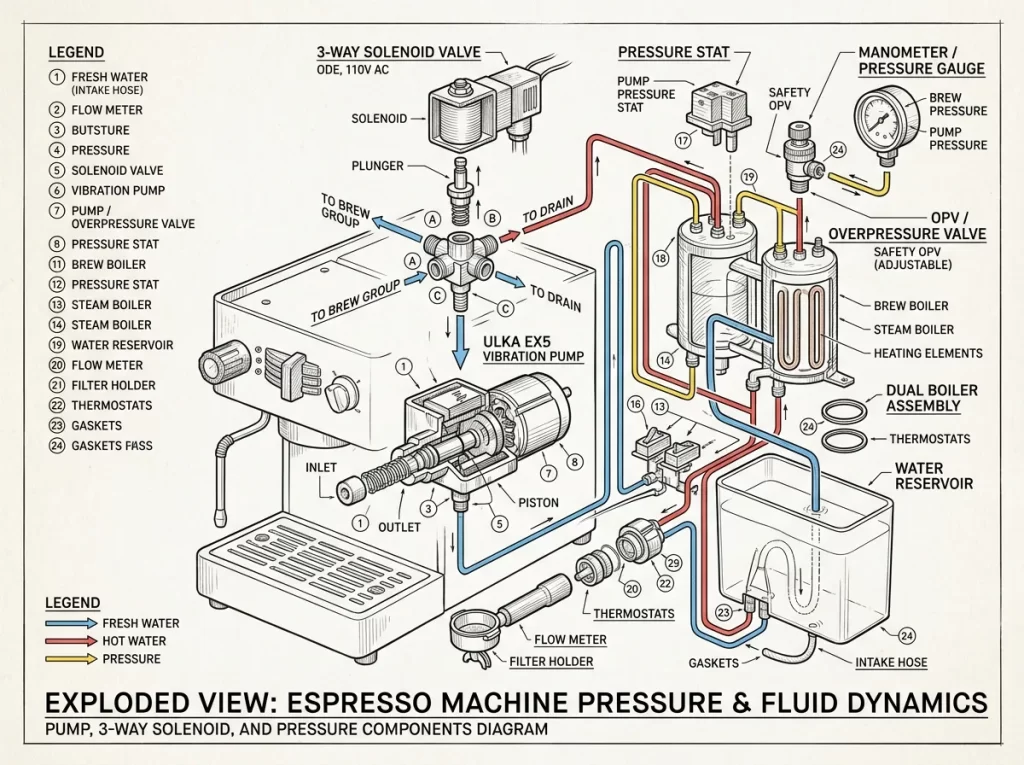
Pump wear: Vibratory pumps typically last 10 to 15 years but do gradually lose peak pressure output as the internal components wear. A pump producing 13 to 14 bars when new may drop to 10 to 11 bars after several years of heavy use – and after the OPV adjusts down, the effective brew pressure may fall below 9 bars. On machines with a pressure gauge, you will see this directly. On machines without one, a pump pressure test with a portafilter-mounted pressure gauge (available for $30 to $50) tells you exactly where your pump sits. If it reads below 8.5 bars consistently, pump replacement is warranted.
OPV (over-pressure valve) adjustment: Many machines have an adjustable OPV that sets the maximum brew pressure. If it has been knocked, adjusted by a previous owner, or has drifted over time, the brew pressure may be lower than 9 bars. On many consumer machines (DeLonghi Dedica, Breville Barista Express, Gaggia Classic) the OPV is adjustable with a screwdriver and takes 5 minutes to reset. Look for your specific model’s OPV adjustment procedure online – this is a common DIY fix.
Ottawa water hardness and why it matters here
Ottawa’s water hardness is meaningfully higher than Vancouver (very soft, about 10 mg/L) and Toronto (relatively soft, about 80 mg/L), putting Ottawa espresso machines under significantly more scale pressure. The City of Ottawa draws from the Ottawa River, which picks up minerals through the watershed – the treated water delivered to households typically measures 100 to 150 mg/L total hardness in most distribution zones.
At 120 mg/L, an espresso machine used twice daily accumulates roughly 180 milligrams of mineral deposits per month in the boiler system. Over 6 months without descaling, that is over a gram of scale inside the machine’s water path – enough to measurably restrict flow and pressure. The problem compounds because scale on heating elements reduces heating efficiency, requiring the element to run longer to reach temperature, further accelerating the cycle.
The practical implication: Ottawa espresso machine owners need to descale significantly more often than the “every 6 months” schedules printed in most espresso machine manuals (which are calibrated for average European water hardness, not Ottawa’s). Set a 6-week reminder for city water homes using the machine daily; 4-week reminders for well-water homes in the Ottawa Valley or rural areas.
Step-by-step: what to check and fix
- First, check your grind and dose. Go finer by 2 to 3 notches. If the shot now extracts in 25 to 30 seconds, the machine is fine.
- Check your coffee freshness. Beans over 3 weeks post-roast produce thin shots. Try a fresh bag from the same grinder settings before diagnosing the machine.
- Run a descale cycle. Use citric acid or commercial descaler. Run at least 2 full tanks of descaler solution, then flush with 3 tanks of clean water.
- Clean the group head and shower screen. Remove the screen and soak in espresso cleaner. Backflush the group head if your machine supports it.
- Soak the portafilter basket. 20 minutes in hot water with espresso cleaner removes accumulated oil and fine grounds that restrict flow.
- Test pump pressure if available. Use a portafilter gauge ($30 to $50) to check actual brew pressure. Should read 8.5 to 9.5 bars during extraction.
- Check OPV adjustment. Look up your model’s OPV location and test/adjust if the pressure gauge reads below 8.5 bars with a properly dosed portafilter.
If the machine still pulls low-pressure shots after these steps, call Max Appliance Ottawa. We handle espresso machine repair across Ottawa, Nepean, Barrhaven, Orleans, and the Outaouais region. Our techs have worked on all major brands and can diagnose pump output, OPV calibration, and boiler issues on first visit.
Consumer Reports Reveals Top Appliance Picks for Shoppers
Frequently asked questions
Need espresso machine repair in Ottawa?
Max Appliance Ottawa serves Ottawa, Nepean, Barrhaven, Orleans, and the Outaouais region.
Book a repair today
Written by
Priya N.
Small Appliance and Kitchen Specialist
Priya focuses on kitchen appliances and small appliance repair for the Ottawa team. She trained as an electrical technician in India before moving to Ottawa in 2016 and has worked in appliance repair across Nepean, Barrhaven, and Orleans. She handles espresso machines, coffee makers, stand mixers, and all cooking appliances, and is the technician customers call when a Nespresso or DeLonghi machine stops building pressure.