Coffee Machine Maintenance: Preventing Scale Buildup in Ottawa
Last updated:
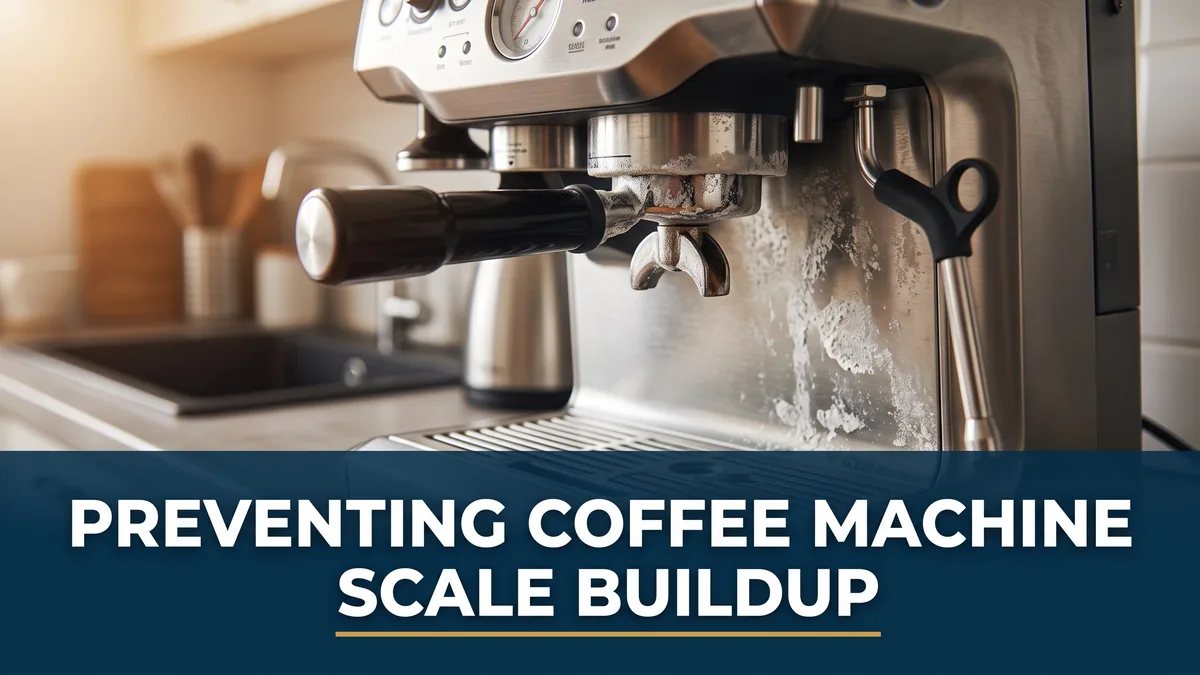
Scale is the quiet killer of home coffee machines. Long before a boiler fails or a pump starts screaming, a thin crust of limescale is already slowing your water flow, throwing off your brew temperature, and shortening the life of the one appliance you lean on every single morning. Plenty of the coffee repair in Ottawa calls we take each year trace straight back to scale that was never dealt with, and a few minutes of professional coffee machine service or simple home descaling would have saved the machine.
The good news: scale is almost entirely preventable, and Ottawa’s tap water gives you a clear reason to stay on top of it. Here is what limescale actually does, how often you really need to descale, and the mistakes that quietly wreck espresso and drip machines alike.
What Scale Actually Does to a Coffee Machine
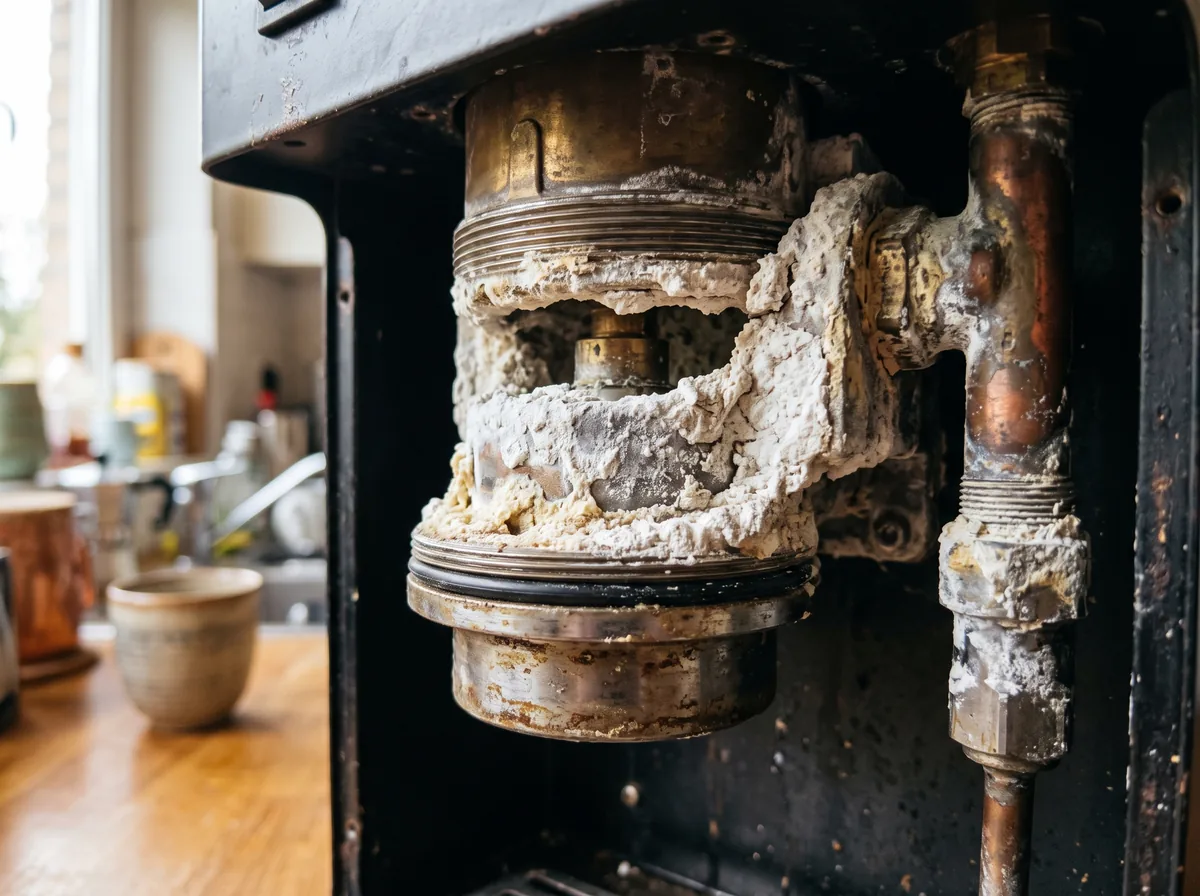
Every time your machine heats water, a little of the dissolved calcium and magnesium in that water drops out and sticks to the hot metal inside. Do that a few thousand times, which is roughly a year of daily coffee, and you get a hard, chalky lining on the boiler walls, the heating element, and the narrow tubes that carry water to your cup.
That crust does three things, none of them good. It insulates the heating element, so the machine runs hotter to hit the same temperature. It narrows the water passages, which is why an old machine dribbles instead of pouring. And on espresso machines, it slowly chokes the group head until the pump strains against a blockage it was never built to fight.
Did You Know?
A layer of scale less than a millimetre thick can cut a heating element’s efficiency by a noticeable margin. The element has to stay on longer to push heat through the crust, which raises your energy use and cooks the internal seals faster. Scale you can barely see is already costing you.
Why Ottawa Water Speeds Up Scale
Ottawa’s drinking water is drawn from the Ottawa River and treated to a moderate hardness. While it isn’t the punishing hardness you find in some limestone-heavy regions, it is firmly hard enough to build scale in a coffee machine over a year. If you have ever seen white spots dry onto a clean glass or a chalky ring in your kettle, that same mineral is settling inside your espresso boiler every day. This frequent mineral buildup makes preventative care a regular necessity for homeowners seeking coffee repair in Ottawa solutions before a major breakdown occurs. You can check the current numbers on the City of Ottawa drinking water quality page.
Hardness also shifts a little across the region. Homes on private wells around Gloucester, Kanata, and the rural edges of Stittsville can see harder water than the city core, which means faster scale and a shorter gap between descaling sessions. If your water leaves heavy deposits everywhere else, assume your coffee machine is collecting them too.
How Often You Should Descale
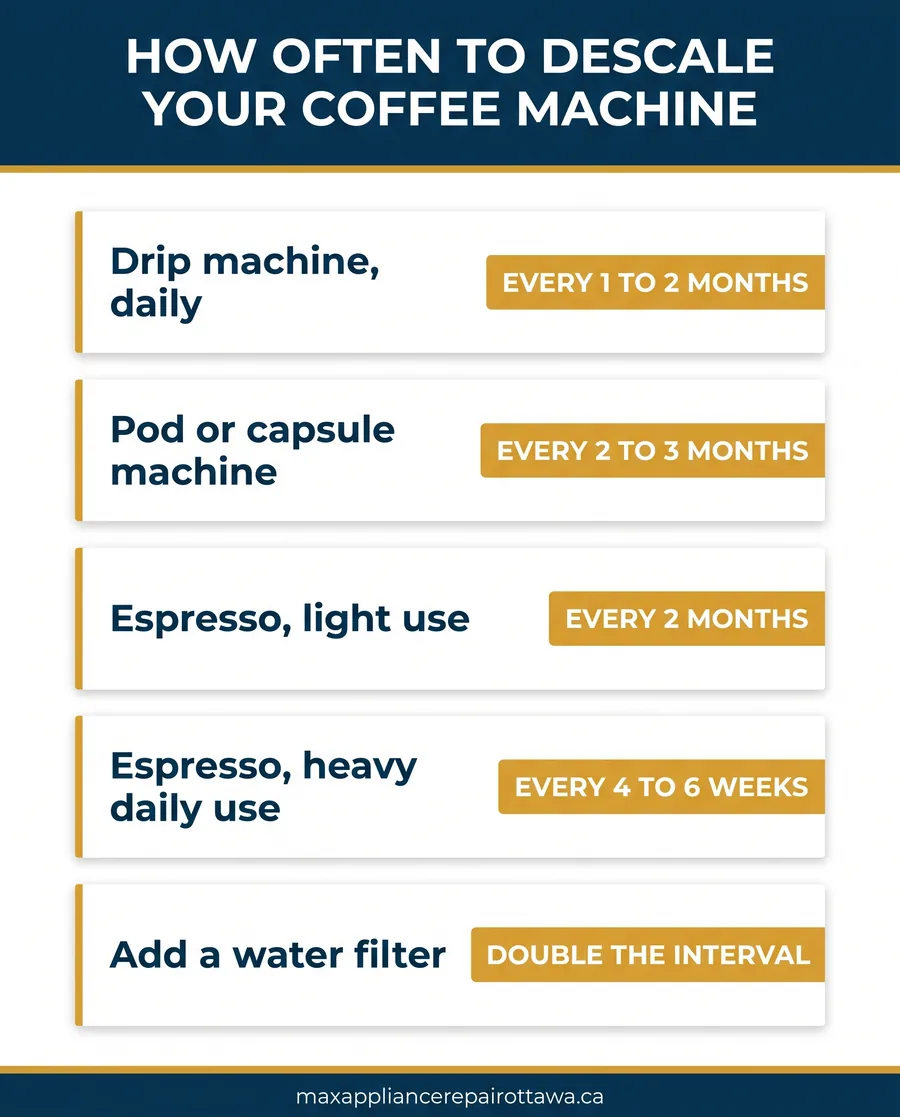
There is no single answer, because it depends on your water and how much coffee you pull. As a working rule for Ottawa water, use the table below and adjust if you filter your water or notice slow flow sooner.
| Machine and Use | Unfiltered Ottawa Tap | With a Water Filter |
|---|---|---|
| Drip machine, daily | Every 1 to 2 months | Every 3 months |
| Pod or capsule machine | Every 2 to 3 months | Every 3 to 4 months |
| Espresso machine, light use | Every 2 months | Every 3 to 4 months |
| Espresso machine, daily heavy use | Every 4 to 6 weeks | Every 2 months |
| Super-automatic bean-to-cup | Follow the machine’s alert | Follow the machine’s alert |
Many machines have a descale light that runs on a water counter rather than actual scale, so it can nag early or late. Treat it as a reminder, not gospel. The real test is flow and taste: a machine that pours slower than it used to, or coffee that tastes flat and lukewarm, is telling you it is overdue.
How to Descale Without Wrecking the Machine
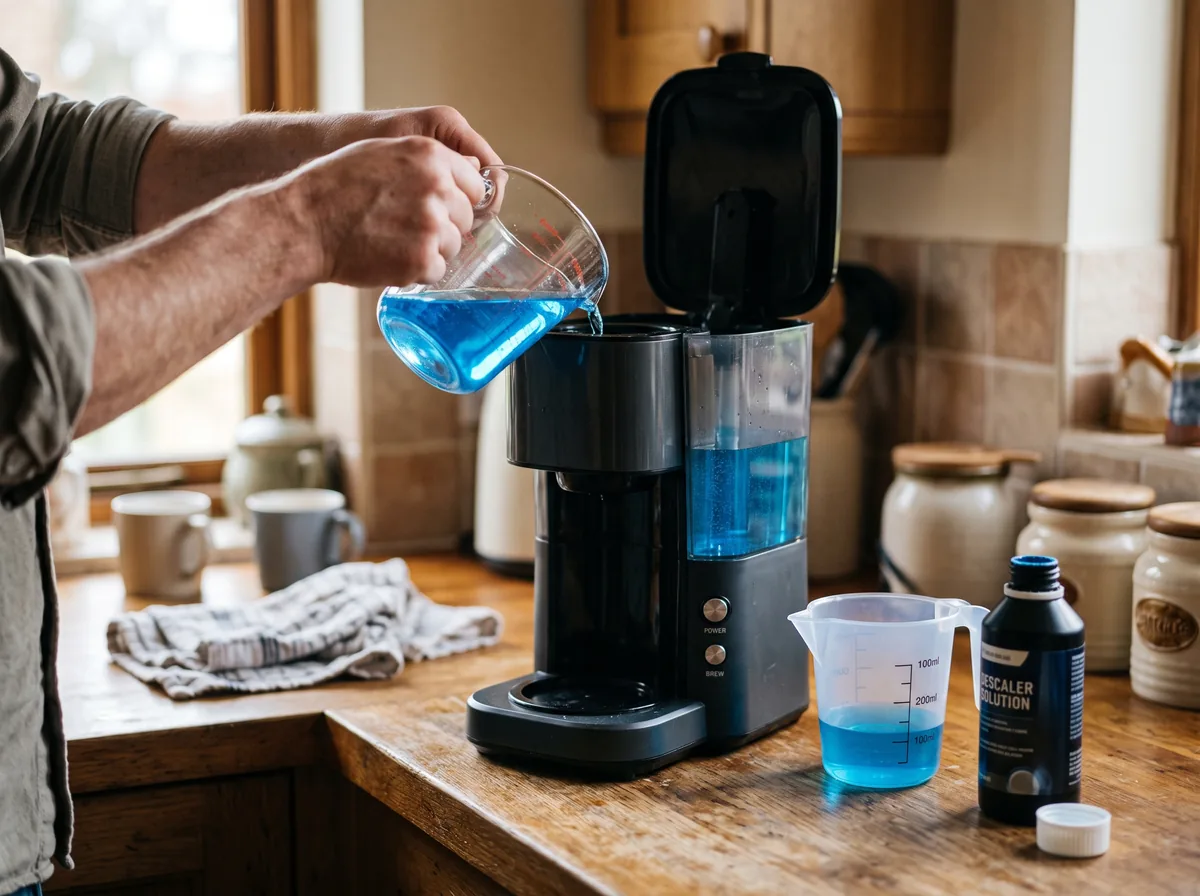
- 1. Empty the drip tray and water tank, and remove any water filter cartridge. Descaler will ruin a softening filter.
- 2. Mix the descaling solution to the ratio on the bottle, or use a commercial descaler made for coffee machines. Follow the strength on the label.
- 3. Fill the tank with the solution and run it through as if brewing, catching the liquid in a jug. Pause part way and let it soak so the acid can work on the scale.
- 4. For espresso machines, run some solution through the group head and, if fitted, the steam wand, so every water path gets cleaned.
- 5. Rinse thoroughly. Run at least two full tanks of clean, fresh water through the machine to flush out every trace of descaler before you make coffee.
- 6. Reinstall a fresh water filter and wipe down the exterior. Your first coffee after should taste clean, not sour.
Pro Tip
Use the descaling product and procedure specified by the coffee-machine manufacturer.
Common Descaling Mistakes
- •Waiting for the machine to slow down before acting. By then, the scale is already thick and a single descale may not fully clear it.
- •Skipping the rinse. Leftover descaler tastes sour and can corrode internal parts if it sits.
- •Using too strong a solution or leaving it in overnight, which can attack aluminium boilers and seals.
- •Descaling a machine the maker says not to descale, such as certain sealed pod units, which forces solution where it should not go.
- •Ignoring the steam wand and group head on an espresso machine, so scale keeps building in the parts you never flush.
People Often Ask: Can descaling fix a machine that already stopped working?
Sometimes. If the machine simply flows slowly or trips a descale lockout, a proper descale can bring it back. But if scale has already jammed a pump, cracked a heating element, or blocked a valve solid, descaling will not undo the damage. At that point, you are looking at a repair, not a clean, and it is worth having a technician confirm what actually failed before you buy a new machine.
When Descaling Is Not Enough
Descaling handles prevention and light buildup. It will not fix a seized pump, a failed heating element, a leaking boiler seal, or an electronic fault. If your machine trips the breaker, leaks from underneath, makes no pressure after a full descale, or heats water that never gets properly hot, the problem is mechanical or electrical, not just mineral. As one of the most trusted teams for coffee repair in Ottawa locals depend on, we service espresso, drip, pod, and bean-to-cup machines and can tell you honestly when a repair makes sense and when it does not.
Download the Free Quick Guide
A one-page guide to how often to descale, how to do it safely, and the mistakes that wreck espresso and drip machines.
Frequently Asked Questions
Descaled the machine and it still will not brew right? Max Appliance Repair Ottawa handles coffee machine repair across Ottawa, fixing espresso, drip, pod, and bean-to-cup models across Ottawa and the surrounding communities, from Kanata to Orleans and Nepean. Book a coffee machine diagnosis and we will tell you straight whether it is a clean, a repair, or time for a new one.