
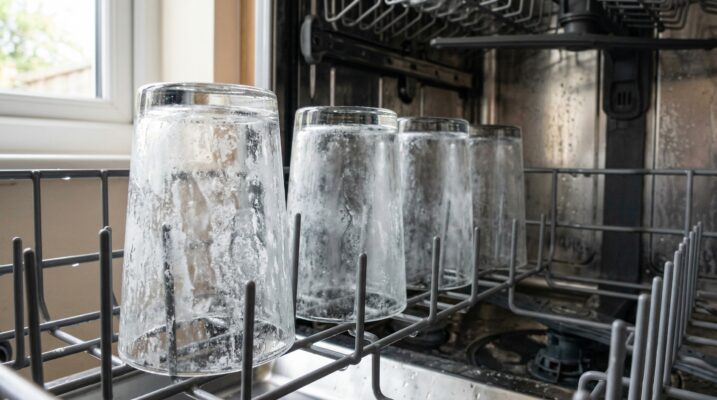
Hard Water and Dishwashers in Ottawa: Why Glasses Come Out Cloudy
If your dishwasher in Ottawa is leaving cloudy spots on glasses, a chalky white film on plates, or a hard crust on the spray arm, you are not buying the wrong detergent and the dishwasher is probably not broken. You are seeing the everyday effects of moderately hard tap water on a major appliance, and Ottawa’s water supply is hard enough to cause exactly this problem in thousands of west-end and Kanata homes. Before you replace the dishwasher, try to fix it with rinse aid, or argue with your spouse about the soap, here is what is actually happening and how to fix it for good.
How hard is Ottawa tap water, really?
Water hardness is measured in milligrams per litre of dissolved calcium and magnesium, and reported either in mg/L or in grains per gallon. Anything above 120 mg/L is considered hard. Ottawa’s tap water hardness varies by neighbourhood and source. Central Ottawa, downtown, and the inner suburbs are supplied from the Ottawa River and run between 30 and 50 mg/L, which is soft. The Carp area, parts of Kanata, and most rural well water in the Ottawa Valley sit between 150 and 350 mg/L, which is moderately to very hard. You can confirm your address-level hardness by checking the City of Ottawa drinking water quality reports or by buying a $10 hardness test strip kit from a hardware store.
If your home is on Ottawa River municipal supply, hard water is rarely the cause of cloudy dishwasher glasses. If your home is on a well or on a hard-water suburb supply, it is almost certainly the cause.

What hard water actually does to a dishwasher
Calcium and magnesium dissolved in water bond with detergent, forming a soap scum that does not rinse away cleanly. The scum coats glasses, dishes, the dishwasher tub, and the spray arm holes. Over months, it builds up into a hard limescale crust on the heating element, the spray arm jets, and the inlet valve. The visible result is cloudy glassware. The mechanical result is a dishwasher that cleans worse and worse every cycle until it eventually clogs the spray arms and the pump and stops working entirely. Lifespan of a dishwasher on untreated hard water in Ottawa is roughly half the lifespan of the same dishwasher on soft water.
How to tell if it is etching or limescale
Cloudy glasses come from one of two completely different problems, and the fix is opposite for each. Pull a cloudy glass out of the dishwasher, dry it, and put a few drops of white vinegar on the cloudy area. Wait 30 seconds, rinse, and dry again. If the cloudiness disappears, you have limescale (mineral deposits) caused by hard water, and the rest of this article is for you. If the cloudiness is still there, you have etching (microscopic damage to the glass surface), which is permanent and is caused by water that is too soft combined with too much detergent and high wash temperature. Etched glasses cannot be saved. Hard-water cloudiness can almost always be reversed.

Fix 1: Run an empty cycle with citric acid
The cheapest and fastest fix. Buy a small bag of food-grade citric acid powder at Bulk Barn for under $5. Empty the dishwasher completely. Pour 100 grams (about half a cup) of citric acid into the detergent dispenser, and another 100 grams into the bottom of the empty tub. Run the longest, hottest cycle. The citric acid dissolves the limescale on the heating element, spray arms, and tub walls in a single cycle. Repeat once a month if you have hard well water. This single fix accounts for the majority of the “my dishwasher is suddenly working great again” Ottawa service calls.
Fix 2: Use rinse aid, every load
Rinse aid lowers water surface tension so the rinse water sheets off glasses and dishes instead of beading up and drying into spots. Every modern dishwasher has a rinse aid dispenser. Almost no Ottawa household actually uses it. Fill the dispenser with any major brand rinse aid and the rinse aid setting on the dishwasher (usually a small dial inside the door) to about level 4 or 5 of 6. Top it up every 2 to 3 weeks. The improvement on cloudy glasses is dramatic and immediate.
Fix 3: Switch to a detergent built for hard water
Most premium dishwasher detergents (Finish Quantum, Cascade Platinum, Method) include water softeners. Cheaper supermarket-brand detergents do not. If you are on hard well water in Carp or Kanata and you are using budget detergent, that is half your problem right there. Premium detergents cost about 20 cents more per load and pay for themselves in dishwasher lifespan and clean dishes.
Fix 4: Install a water softener (the permanent fix)
If your home is on a private well or on hard-water Ottawa Valley municipal supply, the only permanent fix is a whole-home water softener. A softener swaps the calcium and magnesium ions for sodium ions and delivers genuinely soft water to every tap and appliance in the house. Installed cost in 2026 Ottawa runs $1,800 to $3,500 for a basic single-tank unit, or $2,800 to $5,000 for a higher-end twin-tank system that never runs out of soft water mid-shower. The softener pays for itself in 8 to 15 years on appliance lifespan alone, and your dishwasher, washing machine, water heater, kettle, and shower glass all benefit. If you are about to replace the dishwasher because of hard-water damage, install the softener first or you will destroy the new dishwasher in 5 years.
Cleaning your existing dishwasher after the citric acid cycle
Once the inside is descaled, pull the spray arms (most twist off by hand or unscrew with one screw), soak them in white vinegar for 30 minutes, and use a thin pin or paperclip to clear any limescale plug from the spray jet holes. Pull the bottom filter (cylinder near the sump), rinse under hot tap water, and scrub gently with an old toothbrush. Reinstall everything. Run one more empty hot cycle with no detergent. Your dishwasher will perform like new.
When to replace versus repair
If your dishwasher is over 8 years old, has visible limescale crust on the heating element, and is leaving cloudy dishes after a citric acid cycle, the heating element or spray arm assembly is probably damaged beyond cleaning. Replacement parts on a 10-year-old dishwasher often cost more than half the price of a quality used unit. We sell certified-clean used dishwashers from major brands with a working warranty starting around $300 for Ottawa pickup or local delivery.
Frequently asked questions
Is Ottawa tap water hard or soft?
It depends on your neighbourhood. Central Ottawa, the downtown core, and most inner suburbs draw from the Ottawa River and run soft (30 to 50 mg/L). Rural Ottawa, parts of Kanata, Carp, and well-water properties run moderately to very hard (150 to 350 mg/L).
Will a Brita pitcher fix hard water for my dishwasher?
No. Pitcher filters do not remove calcium and magnesium. Only an ion-exchange water softener installed at the main water line will soften your dishwasher supply.
Can I use vinegar in the dishwasher every cycle?
Not in the rinse aid dispenser. Vinegar can degrade the rubber gaskets over time. Use it for an occasional empty descaling cycle (place a cup of vinegar on the top rack and run hot) or use citric acid powder, which is gentler on dishwasher parts.
Why are my plastic containers cloudy but the glasses are fine?
Plastic and glass react differently to soap residue and detergent build-up. Cloudy plastic that does not respond to vinegar is usually old and microscopically scratched, which traps soap film. Replace the worst offenders.
Does the heating element really matter for cleaning?
Yes. A clean heating element delivers the 60-65C wash temperature that activates modern enzyme detergents. A heating element coated in 3mm of limescale loses 30 to 50 percent of its heat transfer and your wash water never gets hot enough to clean properly.
Do you carry dishwashers in Ottawa?
Yes. Max Appliances stocks certified-clean used dishwashers in our Ottawa warehouse, fully tested under wash, rinse, and heated dry cycles before they leave the door. contact Max Appliances for current stock.

Bottom line for Ottawa kitchens
Cloudy glasses in an Ottawa dishwasher are almost always limescale from moderately hard tap water, not a broken appliance. The cheap fixes (citric acid, rinse aid, premium detergent) clear the problem in a single afternoon. The permanent fix (a whole-home water softener) is worth it for any well-water property or hard-water suburb. Replace the dishwasher only when the heating element or spray arm is genuinely damaged. If you do need a replacement, we have certified-clean dishwashers ready in our Ottawa warehouse.

Written by