

Why Your Dryer Stops Working in Ottawa Winters (And How to Fix It)
If your dryer suddenly takes three cycles to dry a single load of towels in January, you are not imagining it. Ottawa winters punish clothes dryers harder than almost any appliance in the house. The same -25C cold snap that freezes your car door also freezes the moisture inside your dryer vent line, blocks airflow, and forces your dryer to work two or three times as hard to do the same job. Before you assume the dryer is dead and start shopping for a replacement, work through the checks below. Most Ottawa winter dryer problems are venting issues, not appliance failures, and a $0 fix is usually 20 minutes away.
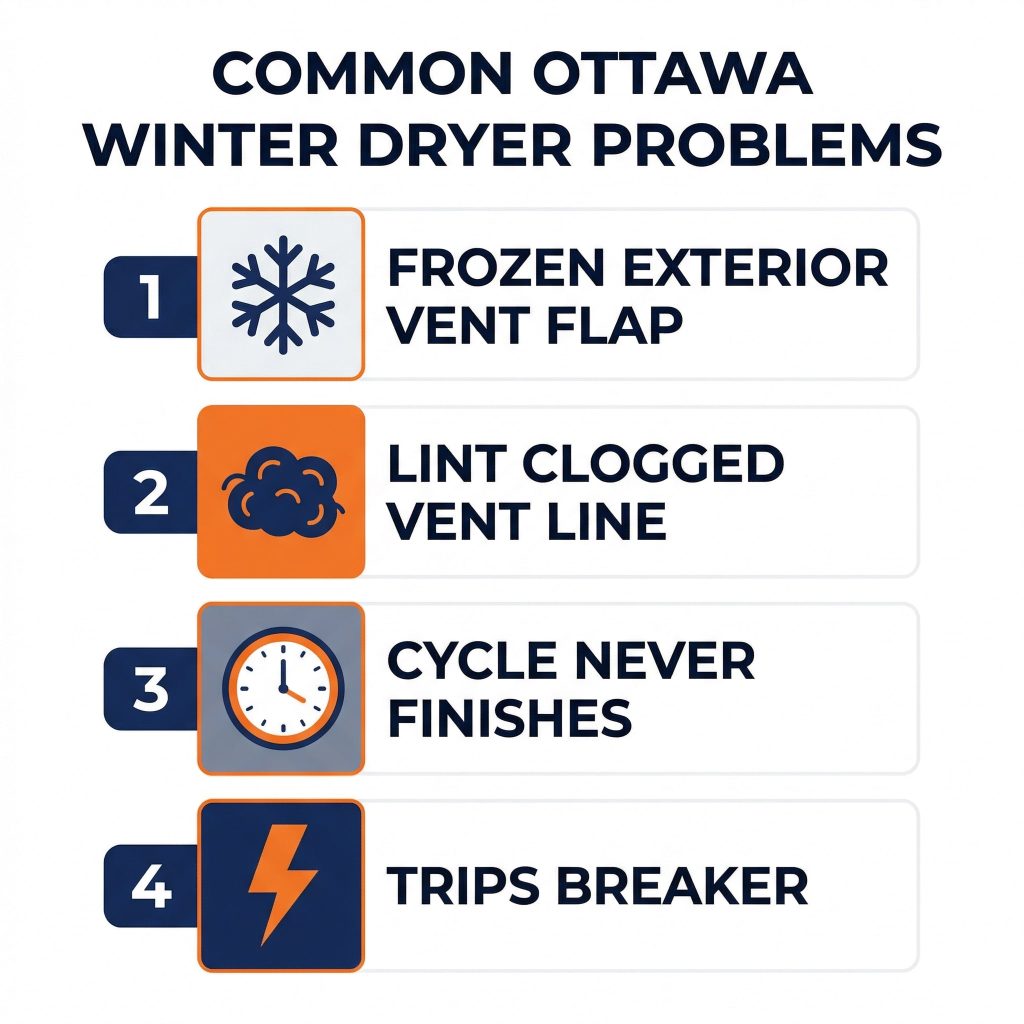
The number one cause: a frozen exterior vent flap
Almost every dryer in Ottawa vents to a hood on an exterior wall, usually with a hinged metal or plastic flap that swings open when the dryer pushes air out. In summer that flap works fine. In January, warm humid dryer exhaust hits the freezing flap, condenses, and freezes solid. The flap is now glued shut by a quarter-inch of ice. Your dryer is still pushing air, but the air has nowhere to go, so it backs up inside the drum, the moisture sensor sees high humidity, and the cycle keeps running and running.
The fix takes 5 minutes. Walk around to the outside of your house and find the dryer vent hood (usually about waist height on the wall closest to your laundry room). If the flap is iced shut, gently pry it open with a flat screwdriver or pour a kettle of warm (not boiling) water over it. Run the dryer for 30 seconds and watch the flap. If it puffs open with each warm air burst, you found the problem. To stop it from happening again, brush the snow away from the hood after every storm and consider swapping the cheap plastic flap for a louvered metal vent cover rated for cold weather.
The number two cause: lint clogged inside the vent line
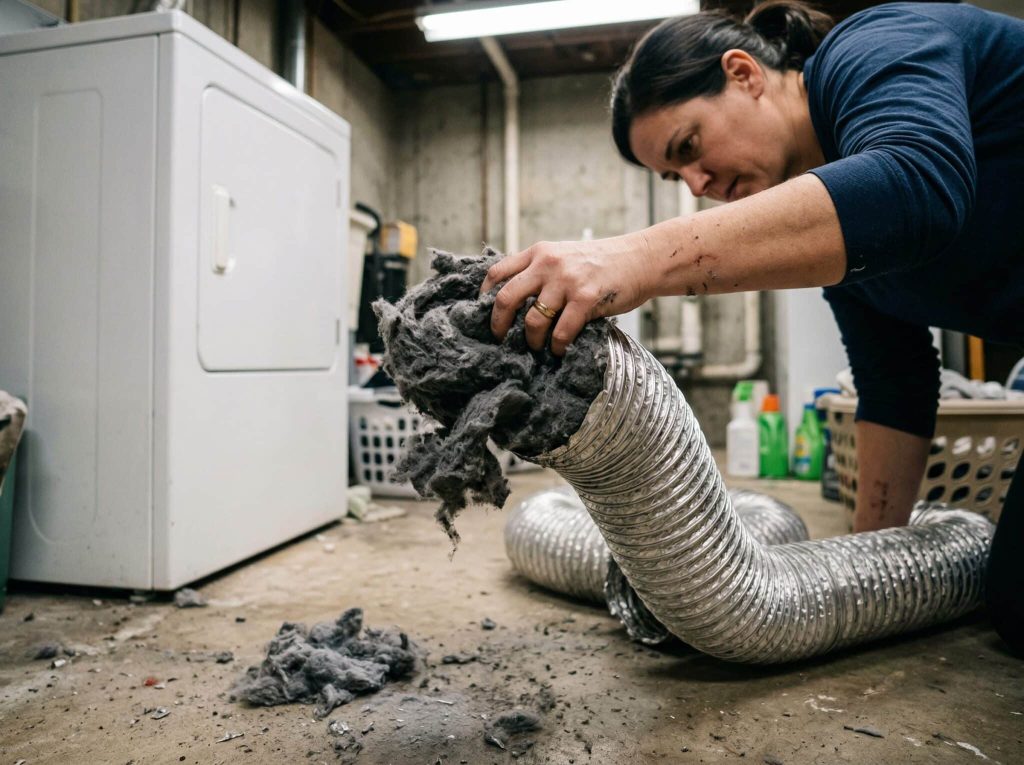
Every Ottawa home deals with dryer lint buildup in the vent system behind the appliance. Over time, this can restrict airflow and make the dryer work harder than it should. In colder months, exterior vent flaps can also be affected by weather conditions, which can further reduce ventilation efficiency and increase lint accumulation inside the line which can also cause fire.
How to check: pull the dryer away from the wall, disconnect the flexible vent hose from the back of the dryer, and look inside. If you see anything more than a thin grey dust coat, the line needs cleaning. A vent brush kit from Canadian Tire costs about $25 and screws onto a cordless drill. Push it through the line, run the drill, pull it back out. You will be shocked at how much lint comes out of a 5-year-old vent line that has never been cleaned.
The dryer is heating but the cycle never finishes
Modern dryers have a humidity sensor inside the drum. When the sensor detects dry clothes, it ends the cycle. If the vent is partially blocked, hot moist air recirculates inside the drum and the sensor never sees dry conditions. The cycle runs the full 90-minute timer, dumps you out, and the clothes are still damp. Your first instinct is to blame the heating element. The actual cause is almost always vent blockage. Clean the vent first. If the symptom persists after a clean vent, then test the heating element.
The dryer trips the breaker mid-cycle
This one is more serious. A dryer that trips its 30-amp breaker in winter is usually one of three things: a failing heating element drawing more current than it should, a failing motor under thermal stress from a clogged vent, or a worn cord and outlet connection that arcs under load. Never reset the breaker more than once on a dryer that keeps tripping. Pull the plug, leave it unplugged, and call an appliance technician or check whether your warranty is still active.
Cold air dryers (heat pump dryers) in Ottawa basements
Heat pump dryers are increasingly popular in Ottawa for their low energy use, but they have a winter quirk most owners do not expect. Heat pump dryers run cooler than vented dryers, around 50C instead of 70C. In a cold Ottawa basement that sits at 14C in February, a heat pump dryer takes 30 to 50 percent longer per load than the same dryer in a heated upstairs laundry room. This is normal physics, not a malfunction. If you want faster cycles, either heat the basement laundry room above 18C or accept the longer run times as the trade-off for lower energy bills.
Vent length and bend rules for Ottawa homes
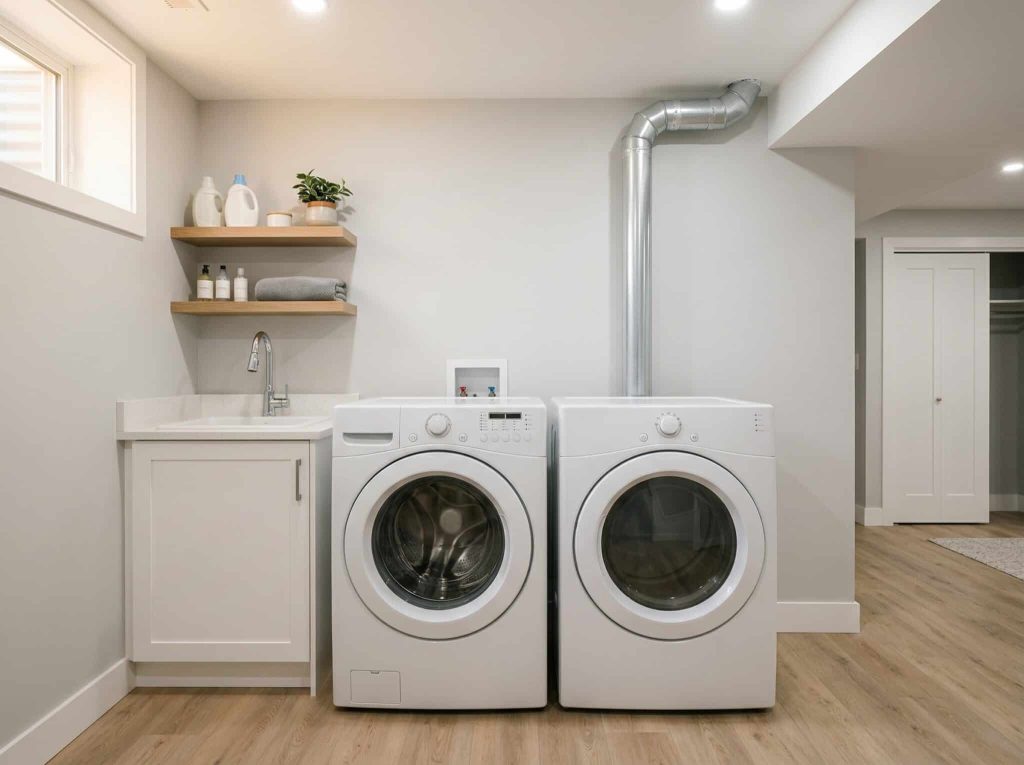
Most modern dryer manufacturers spec a maximum total vent length of 7.5 metres (25 feet) of straight rigid 4-inch metal duct, minus 1.5 metres (5 feet) for every 90-degree elbow. A typical Ottawa basement laundry with two elbows can have at most 4.5 metres of straight duct between the dryer and the exterior hood. If your install exceeds this, the dryer will struggle even in summer and will be miserable in winter. Long flexible foil duct runs are the worst offender. Replace any flexible foil duct with smooth rigid metal duct as soon as practical, and use elbows sparingly.
When the dryer is actually broken
After a clean vent, an unfrozen exterior flap, and a vent line under 5 metres with two or fewer elbows, if your dryer still will not heat, it is time to test components. The usual suspects in order of likelihood are: thermal fuse (cheap, $15, the most common failure after a clogged vent), heating element (mid-cost, $80-150), high-limit thermostat ($25-40), motor (expensive, $200+). For dryers older than 10 years with a failed heating element or motor, replacement is usually the smarter call than repair. Quality used dryers in Ottawa start around $250 and come with a working warranty.
Frequently asked questions
How often should I clean my dryer vent in Ottawa?
Once a year minimum, twice a year if you do more than 4 loads per week or have pets that shed. Schedule the deep clean in October so the line is clear before winter starts. Empty the lint screen after every single load, every time, no exceptions.
Why does my dryer take 3 cycles to dry one load only in winter?
Almost always a frozen or partially blocked exterior vent flap. Cold humid exhaust freezes the flap shut, airflow drops, the humidity sensor never sees dry clothes, and the cycle either runs forever or finishes with damp laundry. Free up the flap, clean the vent line, and the problem usually disappears.
Is it safe to run my dryer if the exterior vent is iced over?
No. A blocked vent forces moist hot air back into your laundry room and dramatically increases lint fire risk. If you cannot get the flap open and the line cleared, do not run the dryer until you do.
Will a heat pump dryer work in an unheated Ottawa garage?
Not well. Heat pump dryers need ambient temperatures above 5C to operate efficiently and many models will not start at all below 0C. An unheated Ottawa garage in January is a bad place for a heat pump dryer. Vented dryers tolerate cold rooms better but still take longer per load.
How much does a dryer vent cleaning cost in Ottawa?
A professional dryer vent cleaning in Ottawa runs $120 to $200 approx for a standard residential job. DIY with a vent brush kit costs about $25 and 30 minutes. For most accessible basement laundry rooms, DIY is fine. Hire a pro if your vent runs through a finished ceiling or has a roof termination. If you suspect a bigger issue, you can also call for same day dryer repair services in Ottawa.
Bottom line for Ottawa homeowners
Eight times out of ten, a dryer that stops working in an Ottawa winter is fighting a frozen vent flap or a clogged vent line. Both are 30-minute fixes that cost under $30 in parts. Work through the vent first, the components second, and only consider replacement if you find an actual failed part on a dryer over 10 years old.

Written by