Essential Steps for Preparing Household Appliances for a Move in Kanata
Last updated:
Movers will happily wheel your fridge onto the truck, but almost none of them will drain the water line, defrost the freezer, or secure a washer drum first. Preparing household appliances for a move is on you, and skipping it is how a working appliance arrives at your new place cracked, leaking, or broken. If you are relocating across the area, taking a few essential steps saves you money and helps avoid needing emergency appliance repair in Kanata on moving day. This guide covers how to properly prepare each machine before it ever moves.
Below is an appliance-by-appliance preparation plan, how far ahead each step needs to happen, and which safety jobs should be left to professionals. Start about a week out to make moving day stress-free.
Start early: a one-week prep timeline
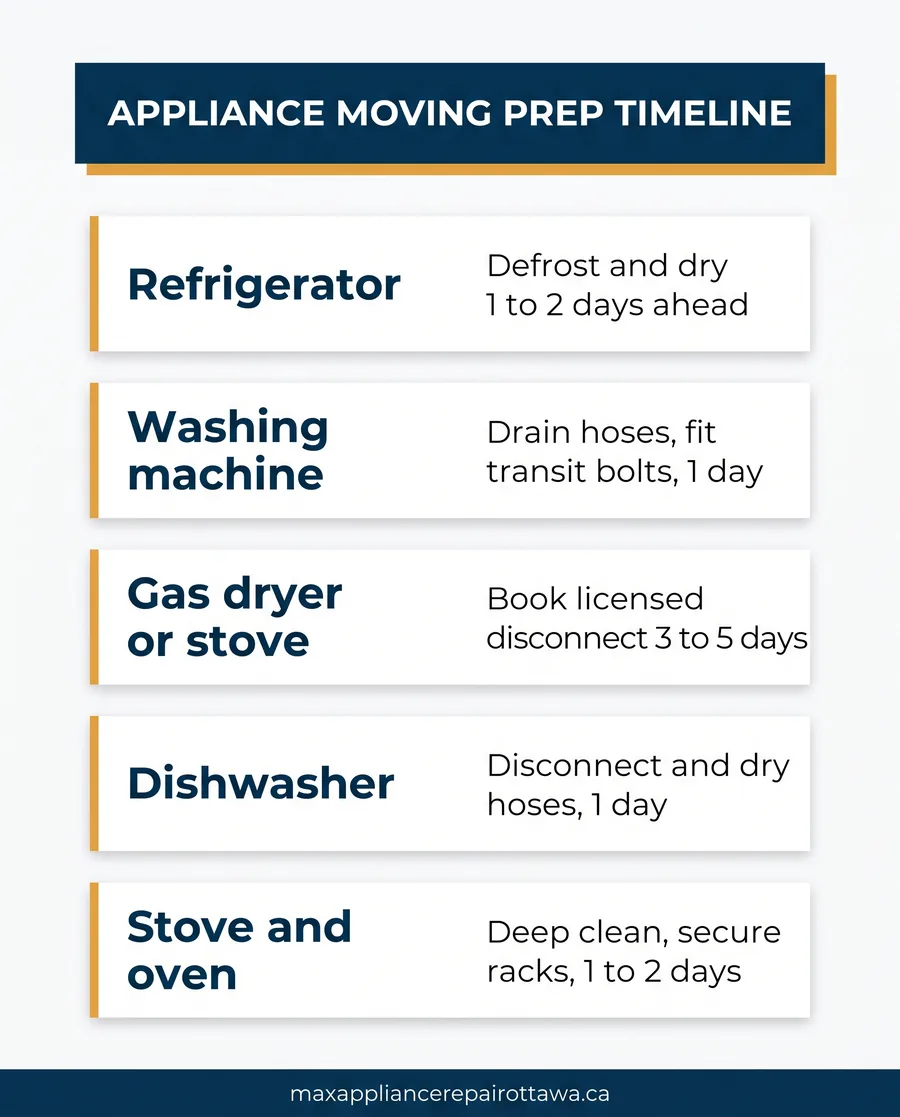
The single biggest moving-day mistake is treating appliances as last-minute items. A fridge needs a full day to defrost and dry, while a gas dryer or stove requires a licensed disconnect booked in advance. Work backward from your move date to ensure everything goes smoothly.
| Appliance | Prep step | Start days ahead |
|---|---|---|
| Refrigerator / freezer | Empty, defrost, drain water line, dry interior | 1 to 2 days |
| Washing machine | Run clean cycle, drain hoses, fit transit bolts | 1 day |
| Dryer (electric) | Clean lint trap and vent, coil cord | 1 day |
| Dryer or stove (gas) | Book licensed tech to disconnect & cap line | 3 to 5 days |
| Dishwasher | Run empty, drain, disconnect and dry hoses | 1 day |
| Stove / oven | Deep clean, secure racks and grates | 1 to 2 days |
Quick take
Anything with water needs 24 hours of drying time so it does not grow mould or freeze in transport. Gas units require a licensed disconnect. Everything else comes down to cleaning, securing loose parts, and proper padding.
Fridge and freezer: defrost, drain, and dry
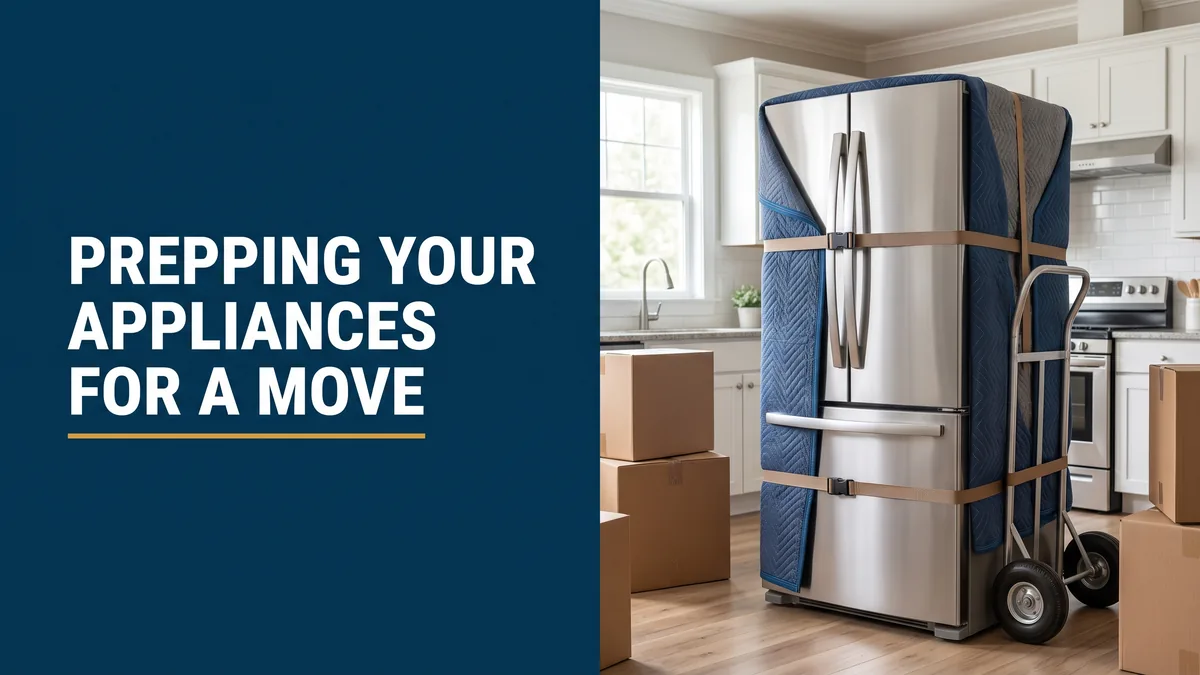
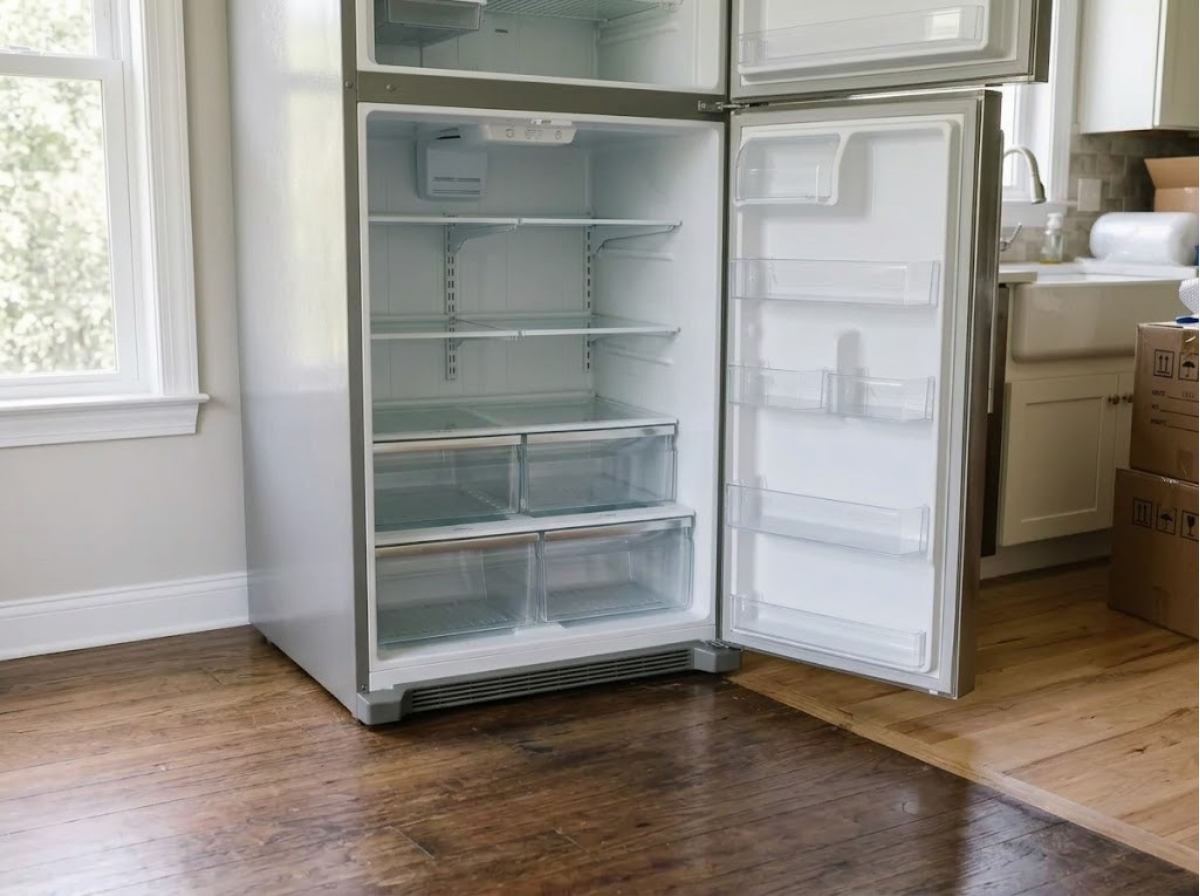
Refrigerators are frequently damaged during moves because they are transported too soon after being unplugged or laid on their side. The compressor holds oil that must stay settled. Tilting or lying a fridge flat can cause oil to enter the cooling lines, a major breakdown that usually requires professional appliance repair services to fix.
- Empty completely, then unplug at least 24 hours prior to moving so the freezer defrosts.
- Drain defrost water and wipe all internal surfaces completely dry to prevent mould growth.
- Disconnect and drain ice maker water lines to avoid leaks during transit.
- Secure doors with tape and coil power cords safely.
- Keep the refrigerator upright during transport. If laid on its side, keep it unplugged and upright for equal time before turning it back on.
Washer and dryer: the transit-damage risk
Washing machines require two important prep steps: draining trapped water and locking the suspended wash drum. Skipping these steps can lead to leaks in the moving truck or damage to internal suspension systems.
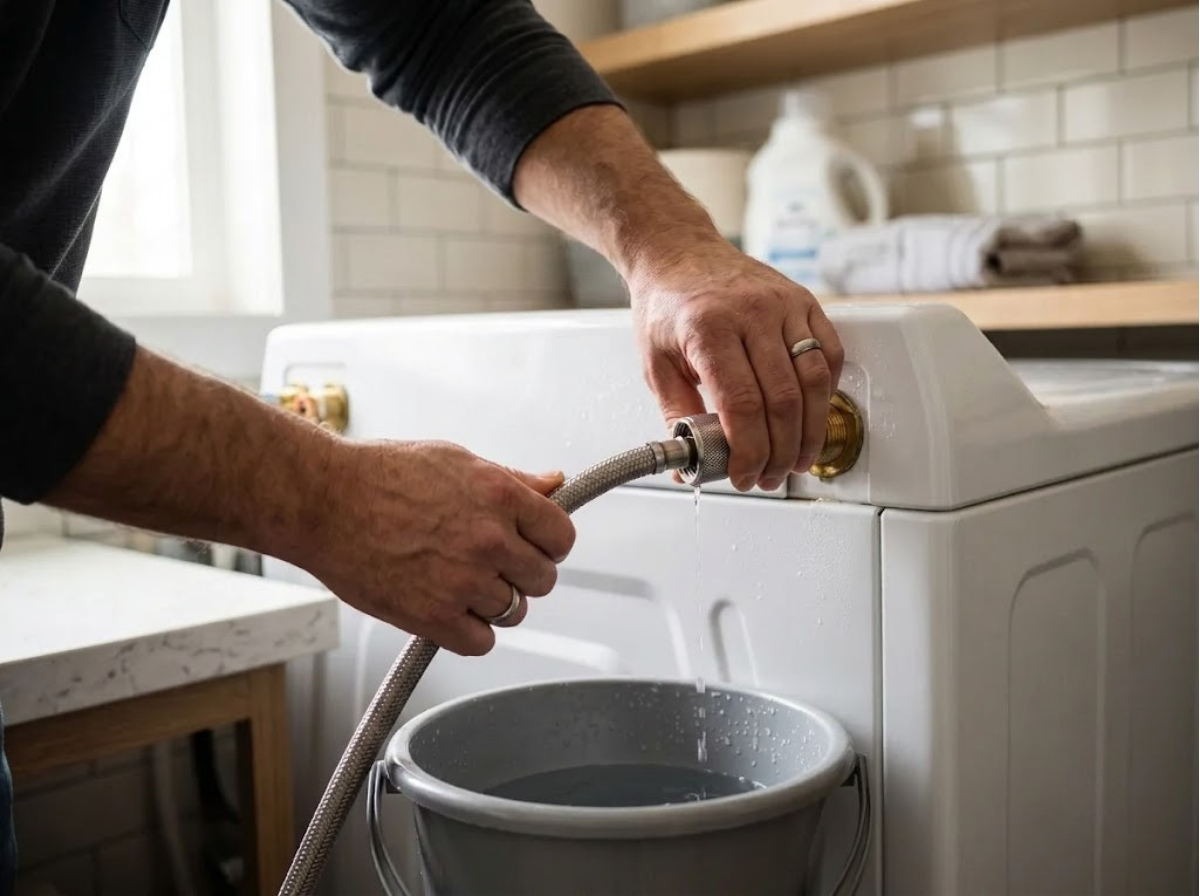
Run a short cycle empty, turn off the water supply, and drain remaining water from the hoses into a bucket. Front-load washers must have transit shipping bolts reinstalled to hold the drum firmly in place during travel. For dryers, clean the lint screen and vent duct before securing cords. Note that gas dryer lines must be disconnected by a licensed technician in compliance with safety standards.
Stove, oven, and dishwasher: disconnect safely
Preparing electric ranges involves cleaning and wrapping glass trays and racks separately to prevent rattling and breakage. Dishwashers need supply lines shut off, water drained completely, and hoses dried prior to packing.
- Clean oven and cooktop thoroughly to remove loose food debris.
- Remove and wrap internal racks, grates, and trays individually.
- Schedule a certified technician to shut off and cap gas lines in advance.
- Disconnect dishwasher lines and allow all moisture to drain out.
- Secure doors and controls with moving tape and protective padding.
When appliance repair in Kanata makes sense after a move
Even with careful preparation, issues can occur once appliances are re-installed. Common post-move issues include refrigerators failing to cool, washers vibrating excessively, or minor water connection leaks.
- Fridge not cooling: Allow up to 24 hours after plugging it in. If temperature remains high, request a diagnostic check.
- Washer shaking excessively: Confirm transit bolts were removed and feet are level before booking service.
- Leaks: Verify connections are tight. Damaged hoses should be replaced immediately.
- Electrical or gas odors: Disconnect power/gas immediately and seek professional assistance.
Download the free quick guide
A printable checklist covering key preparation steps for major household appliances before moving day.
Frequently Asked Questions
Following a proper preparation routine protects your equipment throughout the move. If you encounter any technical issues or need trusted appliance repair Kanata assistance after relocating, Max Appliance Ottawa provides complete support for kitchen and laundry appliances. Get in touch to schedule a prompt service call.