The Most Common Mistakes Homeowners Make When Cleaning a Dishwasher Filter
Last updated:
Here is the thing most people get wrong: Many dishwashers have a removable manual filter, while others use self-cleaning filtration. Check the model’s manual before removing or cleaning any filter. On models with a manual filter, food sludge builds up unless you rinse it out periodically, leading to dishes coming out gritty, cloudy, or smelling faintly of last week’s dinner. A surprising share of the calls we handle for dishwasher repair in Ottawa turn out to be a filthy filter, not a broken machine. Before you assume you need a professional dishwasher repair, it is worth checking your manual and inspecting that filter.
Cleaning it sounds simple, and it is, but the mistakes people make while doing it are what cause the real damage. Some will crack the filter, while others will leave your dishwasher smelling worse than before. Here is how to get it right.
Where the Filter Is and Why It Clogs
On manual-filter units, the filter sits at the bottom of the tub, usually right under the lower spray arm. On most of these machines, it is a cylinder you twist a quarter turn and lift out, often with a flat, fine mesh screen underneath it. Its whole job is to catch food scraps so they do not get pumped back over your dishes or jam the drain pump.
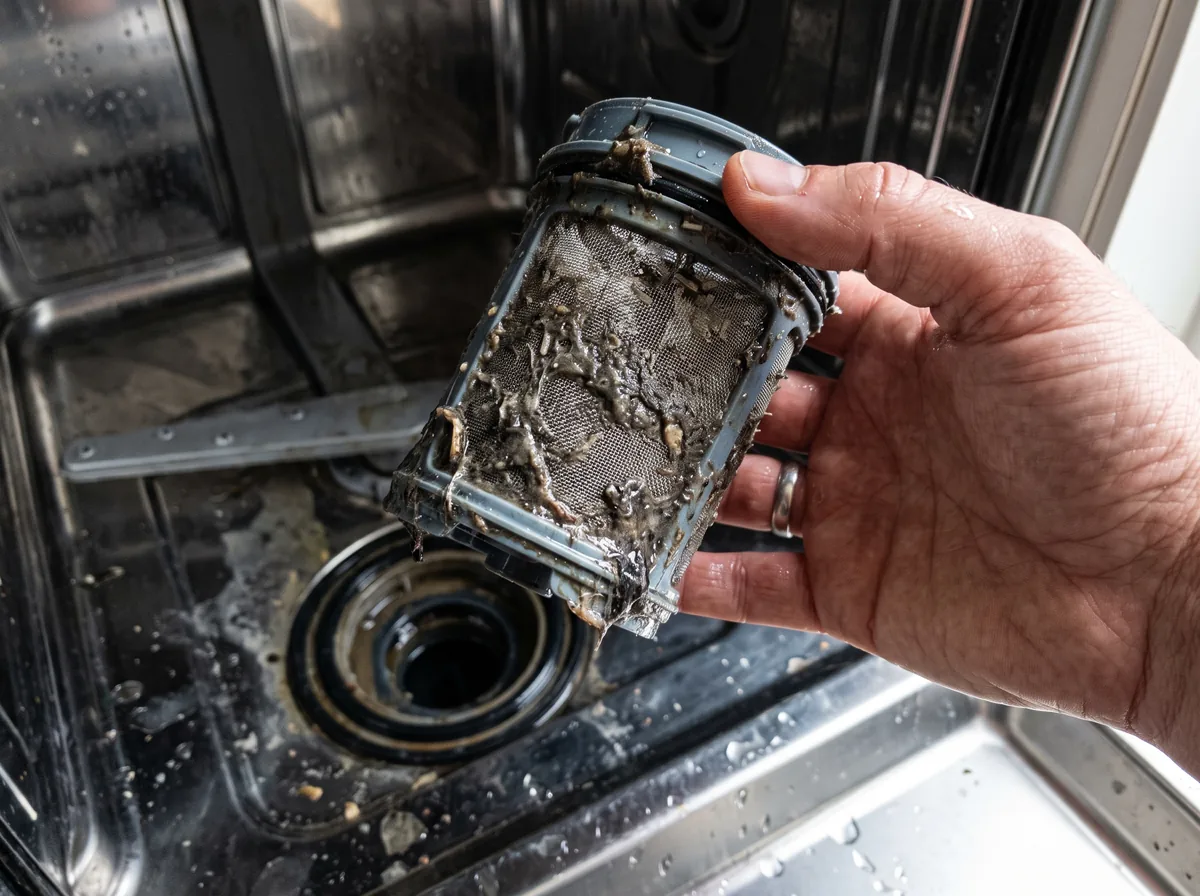
It clogs because it is doing exactly what it should. Grease, coffee grounds, rice, seeds, bits of label, and softened food all collect there. Left alone, that layer turns into a slimy biofilm that traps odours, starves the spray arms of clean water, and eventually pushes debris into the pump. A blocked filter is a very common reason a dishwasher underperforms, and avoiding it can save you from an unexpected dishwasher repair.
Did You Know
Many dishwashers have a removable manual filter, while others use self-cleaning filtration. Check the model’s manual before removing or cleaning any filter. Quiet modern models with manual filters require hands-on maintenance, yet many owners have never once checked or cleaned theirs.
The Most Common Dishwasher Filter Cleaning Mistakes
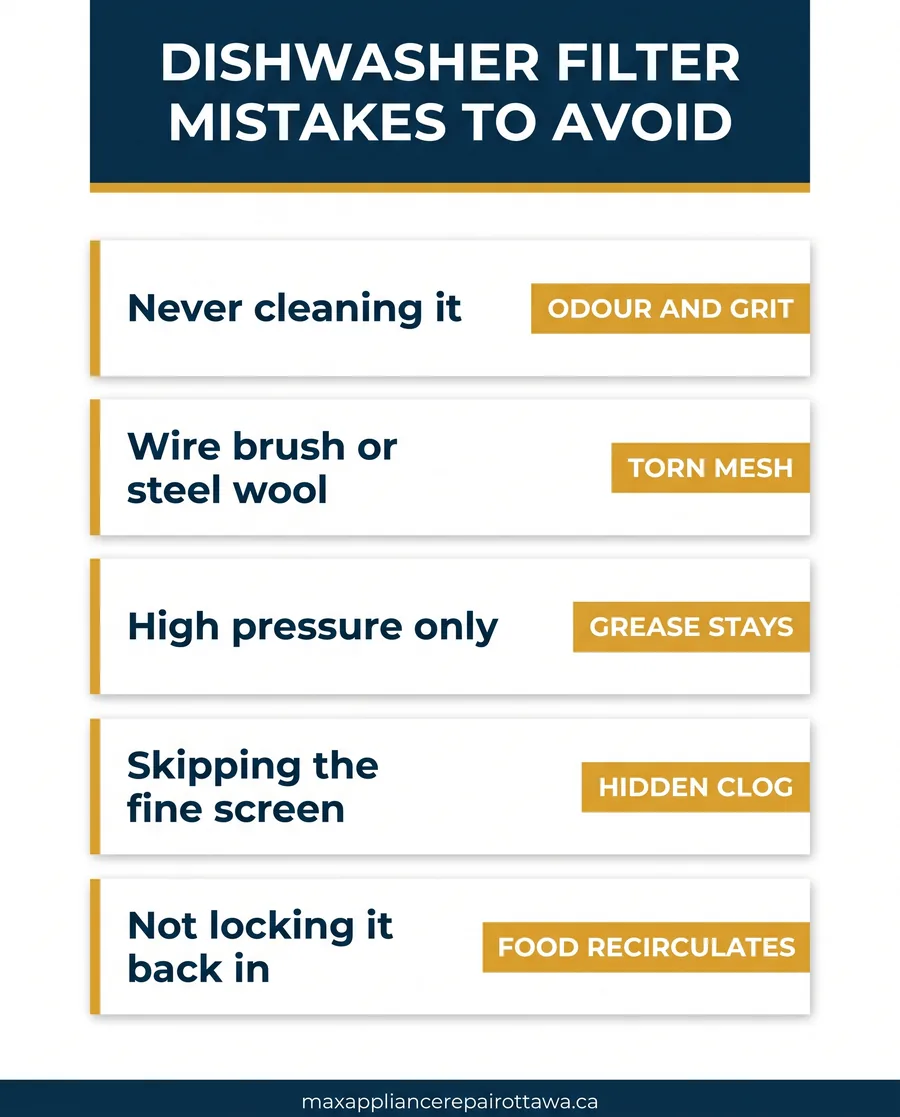
Cleaning the filter is easy to do and surprisingly easy to do badly. If done incorrectly, you might end up needing a major dishwasher repair. These are the errors we see most often, and what each one costs you:
| The Mistake | What It Causes |
|---|---|
| Cleaning without checking the manual first | Risking damage to self-cleaning systems or using unapproved cleaning products. |
| Scrubbing with a wire brush or steel wool | Scratched or torn mesh that lets debris straight through. |
| Blasting it under high pressure only | Grease stays behind; it needs gentle washing according to manual guidelines. |
| Forcing the filter back in the wrong way | Gaps that let food bypass the filter, or a cracked housing. |
| Not seating and locking it fully | The filter rattles loose and food recirculates onto the dishes. |
| Ignoring the fine screen underneath | The coarse filter looks clean while the real blockage sits below. |
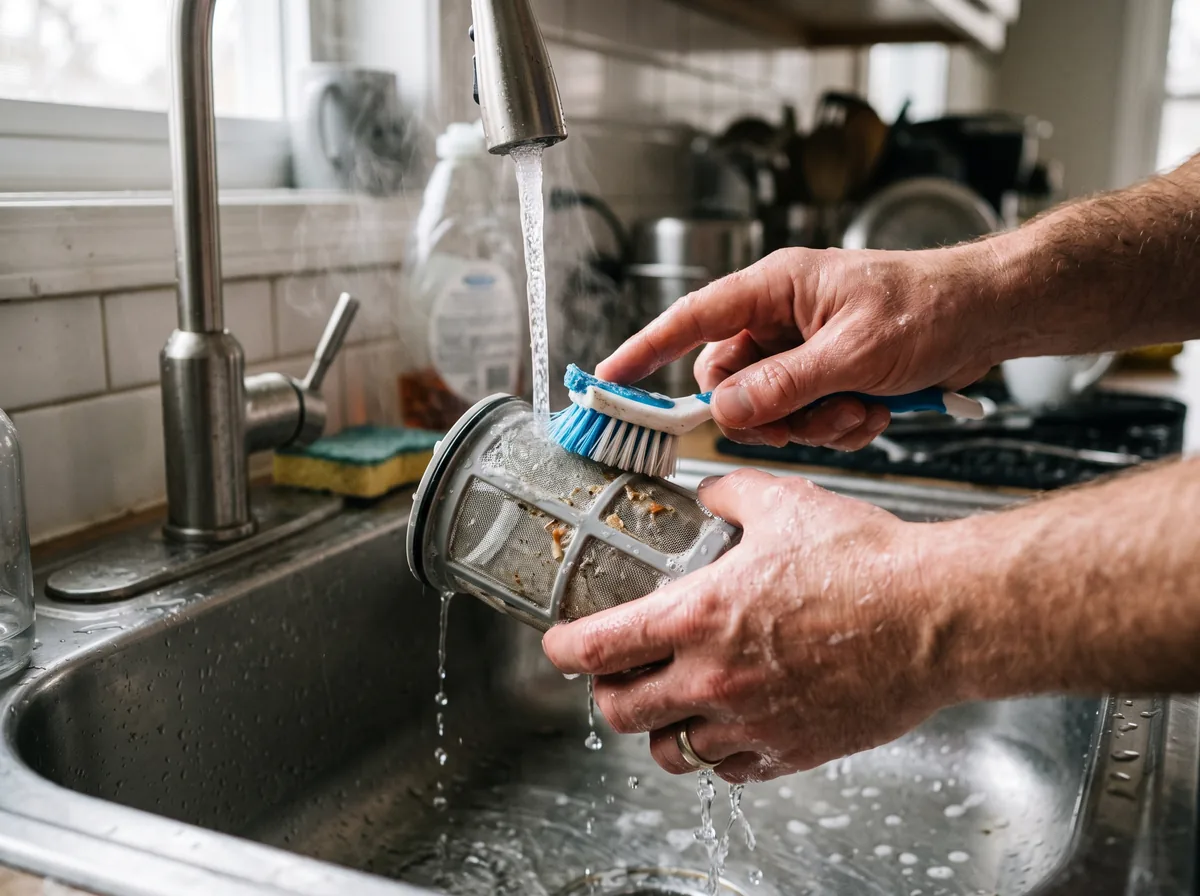
How to Clean the Filter the Right Way
Pro Tip
Never use a metal brush, scouring pad, or abrasive chemical on the mesh. A single torn spot lets food slip past the filter for good, leading to costly replacements. Always follow manufacturer guidelines for cleaning methods.
How Often to Do It
For models requiring manual filter maintenance, frequency depends on how you load the machine. If you scrape plates well before loading, once a month is usually fine. If you rinse little and run heavy, greasy loads, aim for every two weeks. A quick tell: pull the filter, and if it has a visible layer of gunk, you waited too long.
When running a deep clean cycle, use only the cleaning product and procedure approved in the dishwasher’s manual. Never mix cleaning products. Ottawa’s hard water leaves a mineral film on top of food residue, so periodic maintenance following manufacturer guidelines keeps both in check. For the water-hardness side of that story, our guide on cloudy glasses covers it in detail.
Save Your Money
Proper filter maintenance is one of the easiest ways to protect performance. It lets the spray arms run at full pressure, so dishes come out clean on the first pass and you stop rewashing by hand or rerunning cycles. Both waste water and energy. For efficient dishwasher habits, the ENERGY STAR dishwasher resources are a useful reference.
When a Clean Filter Is Not the Fix and Dishwasher Repair Is
A clean filter fixes a lot, but not everything. If dishes still come out dirty, cloudy, or wet after maintaining the filter, the cause is usually elsewhere: clogged spray arm holes, a worn wash pump, a failed heating element that will not heat the water, a stuck detergent dispenser, or a drain that is not clearing. Those are underlying mechanical problems that require a proper dishwasher repair, not just routine cleaning.
People Often Ask: Why Is My Dishwasher Still Not Cleaning After I Cleaned the Filter?
Most often, it is the spray arms. Food and mineral deposits block the small jet holes, so water no longer reaches the top rack with force. Pop the arms off and clear each hole with a toothpick. If they spin freely and the holes are clear but dishes are still dirty, suspect the wash pump, the water inlet, or the heating element, and have the machine looked at rather than guessing at parts.
As one of the most trusted and highest reviewed appliance repair teams in the Ottawa area, we diagnose the actual fault instead of swapping parts and hoping. If a clean filter did not solve it, the problem is worth pinning down properly with a professional dishwasher repair service.
Download the Free Quick Guide
A one-page guide to cleaning your dishwasher filter the right way, the mistakes to avoid, and when the problem is really a repair.
Frequently Asked Questions
Cleaned the filter and the dishes still are not right? Max Appliance Repair Ottawa repairs every major dishwasher brand across Gloucester, Stittsville, and the wider Ottawa region. Book a dishwasher diagnosis and we will find the real reason your dishes are not coming out clean.
Filter clean and still not washing properly? Book Ottawa dishwasher repair for a same-day diagnosis.